Building a fine art portfolio is not an emotional pursuit but a calculated financial strategy; success at the $50,000 level hinges on mitigating risk and optimizing for ROI, not personal taste.
- Blue-chip art offers stability and proven returns, acting as the portfolio’s anchor, while limited-edition prints can provide significant ROI with a lower capital entry point.
- Meticulous due diligence on provenance and paperwork is non-negotiable, as documentation gaps can render an otherwise valuable piece nearly worthless.
Recommendation: Allocate capital across different market segments (e.g., blue-chip prints, mid-career originals) and focus on acquiring assets with impeccable documentation and clear market traction.
For the discerning investor looking to diversify beyond traditional stocks and real estate, the art market presents a compelling proposition. It’s a world of tangible assets and cultural capital, yet it’s often shrouded in the romantic notion to simply “buy what you love.” While passion can guide a collector, an investor with a defined budget of $50,000 requires a more rigorous, data-driven approach. This is not about acquiring decorative pieces; it’s about deploying capital effectively into an asset class with its own unique rules for risk and return.
The common advice to “do your research” is insufficient. A successful strategy demands a nuanced understanding of market segments, from the stability of blue-chip works to the high-growth potential of emerging artists. It requires a forensic approach to due diligence, particularly concerning an artwork’s history, or provenance. The financial stakes are high, as a single misstep in authentication or a gap in paperwork can decimate an investment’s value. The key is to shift one’s mindset from that of a hobbyist to that of a portfolio manager.
But if the primary driver isn’t personal taste, what is it? The answer lies in treating art as a strategic asset. This involves analyzing an artwork’s market fundamentals: its artist’s career trajectory, its format (original vs. print), its condition, and, most critically, its documented history. This guide will deconstruct the process, providing a clear framework for building a resilient and profitable $50,000 art portfolio. We will explore how to identify value, navigate gallery structures, manage risk, and time the market for optimal liquidity.
Contents: A Financial Framework for Art Investment
- Why Blue-Chip Art Retains Value During Economic Recessions?
- How to Buy Your First Gallery Piece Without Overpaying in Commissions?
- Original Canvas or Limited Print: Which Offers Better ROI After 5 Years?
- The Provenance Mistake That Can Render Your Investment Worthless
- When to Sell an Emerging Artist’s Work to Maximize Profitability?
- Why a Gap in Paperwork Can Devalue an 18th Century Work by 60%?
- Primary or Secondary Gallery: Where Should You Look for New Talent?
- Which Historical Art Period Is Currently Undervalued by the Market?
Why Blue-Chip Art Retains Value During Economic Recessions?
In times of economic uncertainty, investors often flee to “safe-haven” assets. While gold and bonds are traditional choices, blue-chip art has proven to be a remarkably resilient store of value. This segment, comprising works by historically significant and globally recognized artists like Andy Warhol, Pablo Picasso, or Jean-Michel Basquiat, functions differently from the broader equities market. Its stability is not accidental but is rooted in a set of powerful economic and cultural drivers that insulate it from market volatility. For a portfolio manager, understanding these mechanics is the first step in building a defensive asset allocation strategy.
One primary factor is the nature of its buyer pool. Blue-chip art attracts a global base of ultra-high-net-worth individuals and institutions whose purchasing power is less correlated with the economic cycles of a single nation. Furthermore, these works achieve a level of cultural permanence; their inclusion in major museum collections and academic discourse establishes a value floor that is difficult to erode. This consensus creates a feedback loop: the more a work is validated by institutions, the more desirable it becomes as a private asset. In finance, this is known as the “Lindy Effect,” where the future life expectancy of a non-perishable thing like an idea or a technology is proportional to its current age. For blue-chip art, centuries of relevance suggest a strong probability of future relevance.
The performance data supports this thesis. Over the long term, the asset class demonstrates consistent appreciation. According to data from Artprice, blue-chip art has delivered an 8.9% average annual return over 20 years, outperforming many traditional investment vehicles. The market for an artist like Andy Warhol serves as a prime example of this resilience. In 2024 alone, over 1,700 of his works were sold at auction, and his pieces remain cornerstones of collections at MoMA, Tate Modern, and The Met. This deep, liquid, and historically validated market provides a level of confidence that is rare in alternative assets, making it an essential anchor for any serious art investment portfolio.
How to Buy Your First Gallery Piece Without Overpaying in Commissions?
Executing your first acquisition is a critical step, and navigating the opaque world of gallery pricing is often the first major hurdle. Unlike a public stock exchange, the art market operates on relationships and discreet negotiations, with commissions built directly into the list price. A gallery’s fee, which compensates them for representing the artist, marketing the work, and running their physical space, is typically around 50% of the final sale price. This “50/50 split” between the artist and the gallery is a long-standing industry standard, particularly in the primary market where a gallery represents an artist directly. Understanding this structure is crucial to avoid overpaying.
While the 50% commission is rarely negotiable on its own, the final list price often has a degree of flexibility. For emerging and mid-career artists, a 5-10% discount off the stated price is a common professional courtesy extended to serious collectors, especially on a first purchase to initiate a relationship. However, this is not guaranteed and must be approached with tact. The key is to demonstrate serious intent and knowledge without appearing aggressive. Asking “Is there any flexibility on the price?” is a standard and respected way to open this conversation. For blue-chip works at major galleries or in the secondary market (resales), discounts may be smaller or non-existent, especially for works in high demand.
The type of venue also dictates the commission structure and your negotiation potential. Primary galleries have the highest built-in commissions but offer ground-floor access to an artist’s career. Secondary galleries and art advisors, who deal in works already on the market, typically charge a lower commission rate (10-25%), offering more transparency. Auction houses add a “buyer’s premium” on top of the hammer price, which is a non-negotiable tiered commission. For an investor with a $50,000 budget, focusing on primary and secondary galleries often provides the best balance of access and cost-effectiveness.
The following table breaks down the typical commission structures an investor will encounter. This framework helps in understanding where costs are concentrated and where negotiation is most viable.
| Gallery Type | Typical Commission | Negotiation Potential | Best For |
|---|---|---|---|
| Primary Gallery | 50% (built into price) | 5-10% discount possible | Emerging artists, first purchases |
| Secondary Gallery | 10-25% | More flexible | Established artists, resales |
| Auction House | 12-25% buyer’s premium | Limited | Blue-chip works, market validation |
| Online Platform | 5-15% | Usually fixed | Accessibility, emerging artists |
Original Canvas or Limited Print: Which Offers Better ROI After 5 Years?
A central strategic decision for an investor with a $50,000 portfolio is the allocation between unique original works (canvases, sculptures) and high-quality, limited-edition prints. The conventional wisdom favors the “aura” of the original, but a purely financial analysis reveals a more nuanced reality. For many blue-chip and established artists, the market for prints can offer a more accessible entry point and, in some cases, a superior percentage-based return on investment (ROI) over a medium-term horizon of five years.
An original canvas is a one-of-a-kind asset. Its uniqueness is its primary value driver, but this also means its price point can quickly exceed a $50,000 budget for an established artist. A limited-edition print, by contrast, is a work conceived by the artist to exist in a specific, finite quantity. The value of a print is determined by the artist’s stature, the edition size (smaller is better), its condition, and the presence of a signature. Because the entry price is lower, the potential for significant percentage growth is high. For example, an investor could acquire a portfolio of prints by several established artists for the same capital required for one minor original canvas by a single artist, achieving instant diversification.
The market for prints by major artists is mature and highly liquid. David Hockney’s print market, for instance, is a case in point for savvy investors. There has been a remarkable 400% growth in the average sale price of a Hockney print since 2000. This demonstrates that prints are not mere reproductions; they are a distinct and highly collectible category of work that can anchor a portfolio. For a $50,000 budget, an allocation strategy might involve dedicating a significant portion to prints by established names to secure a baseline of quality and liquidity, while reserving a smaller portion for a unique work by a promising mid-career artist.
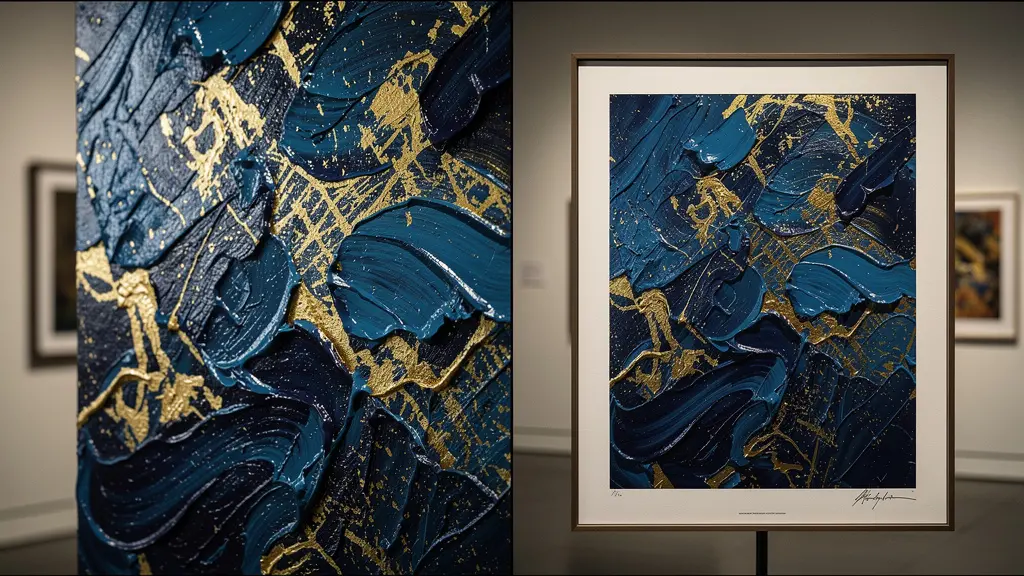
Ultimately, the choice is not about which format is “better” in the absolute, but about its role within your portfolio. An original work offers the potential for a home-run return but carries higher concentration risk. Limited-edition prints offer a lower barrier to entry, easier diversification, and a proven track record of strong, stable ROI. For an investor focused on a five-year timeline, a blended strategy is often the most prudent path forward.
The Provenance Mistake That Can Render Your Investment Worthless
In the art market, the term “provenance” refers to the documented history of a work of art’s ownership. It is the unbroken chain of custody from the artist’s studio to the present day. For a financial investor, provenance is not a matter of historical curiosity; it is the absolute bedrock of an artwork’s value and authenticity. A gap in provenance, a questionable certificate, or a history linked to illicit activity can have a catastrophic impact on an investment. This is the single greatest area of risk for new investors, and where meticulous due diligence pays the highest dividends.
A weak or incomplete provenance introduces doubt about the work’s authenticity and legal title. A piece that is merely “attributed to” an artist, without a definitive record linking it to them, trades at a massive discount. In fact, research shows that works merely ‘attributed to’ an artist can experience up to a 90% value reduction compared to a fully authenticated piece. This is because the risk is transferred to the buyer. Without a solid history, you may be acquiring a clever fake, a studio copy, or a work with a restitution claim against it, particularly for pieces with ownership gaps during the 1933-1945 period in Europe.
Therefore, vetting provenance is a non-negotiable part of the acquisition process. This involves more than just accepting a gallery’s declaration. It means requesting and verifying every document: old sales receipts, exhibition catalogues, letters mentioning the work, and photos of it in previous collections. For contemporary works, documentation should include email correspondence with the artist’s studio and inclusion in their official digital records. For historical works, verification against the artist’s catalogue raisonné—the definitive, scholarly compilation of all their known works—is the gold standard. Ignoring this step is akin to buying real estate without a title search; it’s a risk no serious investor should ever take.
Your Action Plan: The Provenance Verification Checklist
- Verify the complete ownership chain from the artist to the present, paying special attention to the 1933-1945 period for potential restitution issues.
- Check the Art Loss Register and other international databases for any title claims, theft reports, or disputes associated with the work.
- Secure a Certificate of Authenticity (COA) only from a recognized, independent expert or the official artist’s estate, not just the seller.
- For contemporary works, document all email correspondence, studio visit photos, and obtain a direct invoice from the artist’s representing gallery.
- Before purchase, confirm if the work is, or is scheduled to be, included in the artist’s forthcoming catalogue raisonné.
When to Sell an Emerging Artist’s Work to Maximize Profitability?
Investing in emerging artists offers the highest potential for “alpha,” or market-beating returns, but it also carries the most risk. Unlike the established market for blue-chip art, there is no long-term data to rely on. The value of an emerging artist’s work is driven by momentum, critical reception, and institutional validation. For an investor, the challenge is twofold: identifying talent early and, more importantly, knowing the optimal moment to realize a profit. Holding on for too long can be as costly as selling too soon. The key is to monitor a specific set of career milestones that act as clear market signals for a potential “liquidity event.”
The trajectory of an artist like Jean-Michel Basquiat provides a dramatic, if exceptional, example of this dynamic. A piece like his *Untitled* skull painting, which was purchased for USD 19,000 in 1984, sold for USD 110.5 million in 2017. While such returns are exceedingly rare, the principle holds: value is created as an artist transitions from unknown to critically acclaimed. The goal is to exit after a significant value inflection point has occurred but before the market becomes saturated or the artist’s career plateaus. Waiting for an artist to reach “blue-chip” status may mean leaving the majority of the profit on the table for the next investor.
So, what are these critical inflection points? They are external events that validate the artist’s importance and expand their collector base. An investor should have a clear checklist of these triggers. The announcement of an artist’s first solo museum exhibition is arguably the most powerful signal, as it represents the highest level of curatorial validation. Similarly, winning a major art prize, such as the Turner Prize or the Hugo Boss Prize, can dramatically increase market demand overnight. Another key indicator is when an artist begins to be represented by a “mega-gallery” (e.g., Gagosian, Pace, David Zwirner), which provides a global platform and a significant price uplift. A successful auction debut, where a work sells for several times its high estimate, also confirms broader market appetite. When several of these indicators align, the window for maximizing profitability is wide open.
Exit Indicators in Practice: Timing the Market
An investor acquires a painting by an emerging artist for $15,000 from their primary gallery. Over the next three years, the artist is included in a prestigious biennial exhibition and is then announced as the winner of a major national art prize. Their primary market prices double to $30,000, and a similar work at auction achieves $45,000. This confluence of events—institutional validation, critical acclaim, and secondary market confirmation—signals an optimal moment to sell. The investor can either consign the piece to auction to capitalize on the public momentum or offer it privately through an advisor, realizing a significant return before the artist’s market fully matures.
Why a Gap in Paperwork Can Devalue an 18th Century Work by 60%?
While provenance establishes the ownership history, the accompanying paperwork—such as original receipts, export licenses, and exhibition records—serves as the tangible proof of that history. For historical works, particularly those from the 18th century or earlier, this documentation is just as critical as the artwork itself. A gap in the paperwork can create significant uncertainty and risk, which directly translates into a steep price discount. A conservative estimate suggests a devaluation of 60% or more, not because the work is necessarily a forgery, but because the pool of potential buyers willing to accept the risk shrinks dramatically.
The world’s premier auction houses, like Christie’s and Sotheby’s, have extremely rigorous standards for their flagship evening sales, where record prices are set. A work with incomplete or questionable paperwork will simply be rejected for these sales. This is a critical point for an investor focused on liquidity and ROI. As one art market expert noted in a 2024 industry analysis:
A work with a provenance gap cannot be sold at Sotheby’s or Christie’s evening sales. It is relegated to smaller, less prestigious auction houses or private sales.
– Art Market Expert, Industry Analysis Report 2024
This relegation immediately caps the artwork’s potential resale value. Major collectors and institutions, who are the primary drivers of the high-end market, will not typically bid on works outside of these top-tier sales channels due to the perceived risk. The investment is thus handicapped from the start, lacking access to the most liquid and competitive segment of the market. The work becomes harder to sell, harder to insure, and impossible to use as collateral for a loan.
For an 18th-century piece, specific documents are vital. An export license, for example, proves that the work legally left its country of origin, which is crucial for avoiding future repatriation claims from governments. Old inventory labels or wax seals on the back of a frame can link a painting to a famous historical collection, adding immense value. The absence of such documentation forces a potential buyer to ask, “Why is it missing?” Was it lost in a fire, or does it hide a more problematic history, such as a forced sale or theft? In the absence of proof, sophisticated investors will assume the worst-case scenario and either pass on the acquisition or demand a substantial discount to compensate for the risk they are taking on.
Primary or Secondary Gallery: Where Should You Look for New Talent?
For an investor seeking the high-growth potential of new talent, the art market offers two distinct channels: the primary market and the secondary market. The choice of where to look is a strategic one that directly impacts risk, potential ROI, and the nature of the investment itself. Neither is inherently superior; they simply offer different risk/reward profiles. A sophisticated investor must understand how to leverage both.
The primary market is where art is sold for the first time. This is the world of gallery openings, studio visits, and MFA thesis shows. Here, an investor is buying directly from the gallery that represents the artist. The primary advantage is the “ground-floor” price point. You are acquiring the work before the artist has a significant auction history or widespread recognition, offering the highest potential for appreciation. This market is built on relationships; cultivating a connection with a sharp gallerist who has a reputation for discovering talent can grant you exclusive access to the best new works before they are offered to the public. However, the risk is also at its peak. You are betting on the artist’s future potential with very little data, and liquidity can be low initially if the artist fails to gain traction.
The secondary market, by contrast, consists of works that have been sold at least once before. This is the domain of auction houses and galleries that specialize in reselling works by established artists. When scouting for “new” talent on the secondary market, an investor is typically looking at artists who have already passed the initial emerging phase and have a budding auction record. The risk is lower because the market has already begun to validate the artist’s work and establish a price range. The potential ROI is consequently more moderate, as some of the initial explosive growth has already occurred. This market is driven by data, not relationships. Decisions are based on auction results, sales volume, and an artist’s exhibition history.
The following table provides a clear comparison of these two market segments, helping an investor allocate their $50,000 budget according to their risk tolerance.
| Factor | Primary Gallery | Secondary Gallery |
|---|---|---|
| Risk Level | High (unproven artists) | Lower (established market) |
| Potential ROI | Highest (ground-floor prices) | Moderate (price discovery done) |
| Information Access | Direct artist relationship | Market data only |
| Price Point | $1,000-$50,000 | $10,000-$1M+ |
| Liquidity | Low initially | Higher, established market |
Key Takeaways
- A financial-first approach to art investing at the $50,000 level prioritizes ROI and risk management over personal aesthetic taste.
- Portfolio construction should balance the stability of blue-chip assets (often prints) with the high-growth potential of carefully vetted emerging artists.
- Impeccable provenance and complete paperwork are the most critical drivers of value and liquidity; any compromise in this area represents an unacceptable investment risk.
Which Historical Art Period Is Currently Undervalued by the Market?
Identifying undervalued assets is the holy grail for any investor. In the art market, this often means looking away from the headline-grabbing contemporary sales and toward historical periods that have fallen out of fashion but possess strong fundamentals. While the market is dynamic, several indicators can point to a historical art period that is poised for a positive re-evaluation. For an investor, acquiring works from such a period before the broader market takes notice can be a powerful strategy for generating alpha.
An undervalued period is typically characterized by price stagnation despite significant historical importance, high-quality craftsmanship, and a finite supply of works. The key is to look for signs of a nascent academic and curatorial rediscovery. A string of recent museum retrospectives dedicated to artists of a specific movement, a growing number of scholarly publications, or increased acquisitions by institutions at lower price points are all leading indicators that the market’s attention is beginning to turn. This is the institutional consensus building in real-time, which often precedes a commercial market upswing.
Currently, many experts point to certain segments of 19th-century academic painting and the work of second-tier Post-Impressionists (those outside of the mega-names like Van Gogh or Cézanne) as being potentially undervalued. For decades, these artists were overshadowed by the rise of Modernism, but their technical skill and historical context are now being re-examined. An investor could acquire a high-quality work by a respected but second-tier Barbizon School painter, for example, for a fraction of the cost of a minor contemporary piece. The investment thesis is that as the supply of top-tier Impressionist and Modern works becomes exceedingly scarce and expensive, the market will inevitably turn its attention to the next-best tier of quality from the same era.
The broader art market’s health supports this kind of strategic exploration. Projections show a robust expansion on the horizon. According to market analysis, the global art market is expected to grow from approximately $73.43 billion in 2024 to around $99.65 billion by 2034. This influx of capital will inevitably seek value across all sectors, and those who have already positioned themselves in historically important but overlooked periods stand to benefit the most. The strategy is not to guess, but to follow the early institutional signals and invest ahead of the commercial curve.
Building a successful art portfolio is an exercise in discipline, diligence, and strategy. By moving beyond emotional responses and adopting the rigorous mindset of a financial analyst, an investor can effectively navigate this complex market. The key is a balanced approach: anchoring the portfolio in the proven stability of blue-chip works while seeking calculated exposure to the growth of emerging and undervalued segments. With a clear focus on provenance, market signals, and value, a $50,000 budget can be the foundation of a significant and rewarding tangible asset collection. For those serious about this journey, the next logical step is to engage with a qualified art advisor to help validate your strategy and identify specific acquisition targets.