Artists & masterpieces
Walk into any major museum, and you’ll notice certain paintings draw crowds while others are quietly admired. The Mona Lisa attracts millions annually, Van Gogh’s Starry Night adorns countless dorm rooms, and Picasso’s Guernica stops viewers in their tracks. But what transforms a painting into a cultural icon? The answer involves far more than artistic skill—it’s a complex interplay of technical innovation, historical context, institutional power, and sometimes, sheer chance.
Understanding masterpieces requires looking beyond their surfaces. Each iconic work carries layers of meaning: the revolutionary techniques that shocked contemporaries, the personal struggles of their creators, the cultural forces that elevated them to canonical status, and the ongoing debates about their interpretation. This exploration examines how and why certain artworks achieve legendary status, what makes their techniques remarkable, and how our understanding of them continues to evolve.
How the Art Canon Takes Shape
The list of « must-see » masterpieces didn’t emerge from objective quality assessments. Instead, it reflects centuries of decisions made by collectors, institutions, critics, and markets—each with their own agendas and blind spots.
The Role of Scarcity and Provenance
Scarcity drives value, but not always in straightforward ways. A Leonardo da Vinci painting commands astronomical prices partly because fewer than 20 authenticated works survive. Yet scarcity alone doesn’t guarantee canonization—thousands of rare Renaissance paintings remain obscure. What matters is documented ownership: artworks with royal provenance or dramatic theft stories (like the Mona Lisa’s 1911 disappearance) gain mystique that elevates their status beyond their visual qualities.
The Western Bias Problem
The traditional canon overwhelmingly features European male artists, reflecting the power structures of the institutions that shaped it. Museums in Western capitals acquired works that reinforced their own cultural narratives, while systematically undervaluing artistic traditions from Africa, Asia, and indigenous cultures. Recognizing this bias doesn’t diminish individual masterpieces—it contextualizes how selective our « universal » standards actually are. Contemporary museums increasingly acknowledge these gaps, though the market and popular imagination still privilege the established names.
Price Versus Quality: A Dangerous Correlation
Auction records make headlines, but market value rarely correlates with artistic merit. A painting’s price reflects availability, collector demand, investment trends, and provenance—not necessarily innovation or emotional depth. Works by living artists can sell for millions based on market speculation, while technically superior pieces languish in storage because they lack the « brand recognition » that drives contemporary collecting. Understanding this distinction helps viewers trust their own responses rather than deferring to price tags.
The Mona Lisa: Deconstructing an Icon
Leonardo da Vinci’s portrait of Lisa Gherardini exemplifies how technical brilliance, historical accident, and modern media converge to create an artwork larger than itself.
Revolutionary Techniques That Changed Portraiture
Three innovations distinguish this work. First, the sfumato technique—building up translucent layers of oil paint to create imperceptible transitions between colors and tones—produces the painting’s mysterious, almost breathing quality. Leonardo applied up to 30 ultra-thin glazes in areas like the eyes and mouth, a painstaking process requiring months between layers.
Second, the three-quarter view was revolutionary for its time. Earlier portraits showed subjects in strict profile; Leonardo’s angled pose creates psychological engagement, making viewers feel the sitter acknowledges their presence. Third, the unprecedented attention to hand anatomy and positioning—the relaxed fingers, the gentle overlap, the subtle modeling of bones beneath skin—demonstrates Leonardo’s anatomical studies and adds to the portrait’s living presence.
The Ambiguity That Captivates
The famous smile’s enigmatic quality stems directly from sfumato. Leonardo deliberately blurred the corners of the mouth and eyes—precisely where we read emotional cues—making her expression shift as viewers move or lighting changes. This technical choice creates perpetual ambiguity: is she amused, melancholic, knowing, or indifferent? The painting offers no definitive answer, inviting endless interpretation.
The Viewing Experience Today
Seeing the Mona Lisa at the Louvre presents challenges. The painting measures just 77 × 53 cm—surprisingly small given its oversized reputation. Protective glass, crowd barriers, and throngs of smartphone-wielding tourists create a viewing experience far removed from intimate contemplation. The risk of vandalism necessitates these measures: the painting has survived acid attacks and thrown objects. Yet these very protections reinforce its status—we protect what we deem invaluable, and that protection signals importance to future generations.
Van Gogh’s Starry Night: When Technique Becomes Emotion
Vincent van Gogh’s most famous work demonstrates how personal struggle and artistic innovation can produce images that resonate across cultures and time.
The Impasto Method as Emotional Language
Van Gogh applied paint so thickly that impasto ridges cast actual shadows on the canvas surface. This wasn’t carelessness—it was deliberate emotional expression. The swirling sky’s physical texture makes celestial movement almost tangible. When viewed in person at MoMA, the painting’s three-dimensional quality surprises viewers accustomed to flat reproductions. Each brushstroke remains visible, creating a direct connection to the artist’s hand movements and emotional state during creation.
Color Theory in the Asylum
Van Gogh painted Starry Night while voluntarily committed to the Saint-Paul-de-Mausole asylum in southern France. His color choices—the deep ultramarine blues against acid yellows and whites—reflect his systematic study of complementary color theory. These contrasts create vibration and intensity that mirror psychological turbulence while remaining formally sophisticated. The influence of Japanese prints, which van Gogh collected and studied, appears in the bold outlines and flat color areas that coexist with the European tradition of modeling and perspective.
The Village That Wasn’t There
Despite being based on van Gogh’s asylum window view, Starry Night contains deliberate fabrications. The prominent church with its northern European spire didn’t exist in the Provençal landscape before him—van Gogh imported it from Dutch memories. The cypress tree, while common in the region, is exaggerated to flame-like proportions. These inventions reveal the work as emotional projection onto landscape rather than faithful observation, connecting his mental state to cosmic vision through symbolic rather than literal representation.
Dispelling the « Mad Genius » Myth
The persistent narrative that van Gogh’s mental illness enabled his genius does a profound disservice. His letters reveal a disciplined, self-aware artist who painted productively during stable periods and suffered terribly during breakdowns. The « mad genius » romanticization obscures the deliberate technical development, color theory study, and compositional planning evident in his work. Van Gogh was brilliant despite his afflictions, not because of them.
Picasso’s Revolutionary Ruptures
Pablo Picasso’s career demonstrates how deliberately breaking established rules can redefine what painting accomplishes. Two works exemplify this radical approach.
Les Demoiselles d’Avignon: Destroying Beautiful Perspective
This 1907 painting shattered Renaissance conventions that had dominated Western art for four centuries. Picasso abandoned single-point perspective, showing the five figures from multiple viewpoints simultaneously—a face in profile with both eyes visible, bodies twisted into geometrically impossible positions. The influence of African masks appears in the angular, stylized faces, though Picasso’s appropriation of African art raises ongoing questions about cultural extraction versus genuine dialogue.
The brothel context (the original title referenced a Barcelona red-light district) was provocative, but the formal innovations proved more shocking. Even Picasso’s avant-garde colleagues initially rejected the work. Its aggressive rejection of beauty, spatial coherence, and the idealized human form represented a complete rupture—one that would make Cubism possible.
Guernica: Visualizing Horror Without Blood
Picasso’s response to the 1937 bombing of the Basque town employs different revolutionary strategies. The monumental scale (349 × 776 cm) creates immersive impact—viewers stand within the depicted chaos rather than observing it from comfortable distance. Yet Picasso visualized war’s horror without graphic violence. No blood appears; instead, symbolic figures—the anguished horse, the defiant bull, the mother with dead child—convey suffering through formal distortion and psychological intensity.
The work toured internationally as anti-fascist propaganda, though its lack of specific political imagery allows ongoing interpretation. This ambiguity carries risks: various movements have attempted to appropriate Guernica’s moral authority for conflicting causes. Yet the painting’s formal power—the shallow, claustrophobic space, the restricted palette, the bodies fragmented by violence—transcends specific historical moment to become a universal statement against civilian targeting in warfare.
Understanding masterpieces means recognizing them as products of specific moments, techniques, and decisions—not timeless objects that emerged fully formed. The canonical works examined here achieved their status through combinations of genuine innovation, institutional support, market forces, and historical accident. Approaching them with knowledge of their contexts and techniques allows for deeper appreciation while maintaining healthy skepticism about the power structures that elevated certain voices above others. The conversation about what constitutes a masterpiece continues to evolve, and your informed perspective contributes to that ongoing dialogue.
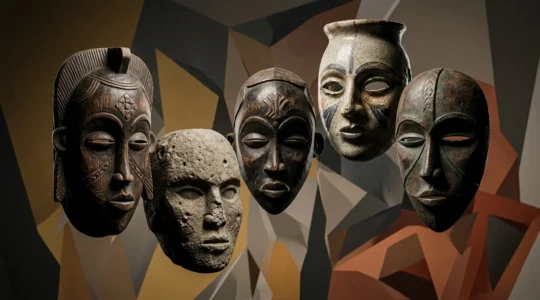
Why Was « Les Demoiselles » Called the Most Ugly Painting in Paris?
The charge of « ugliness » leveled against Les Demoiselles d’Avignon completely misses the point; the painting was never meant to be beautiful, it was engineered as an assault. Picasso deliberately shattered Renaissance perspective to demolish the safe distance between the art…
Lire la suite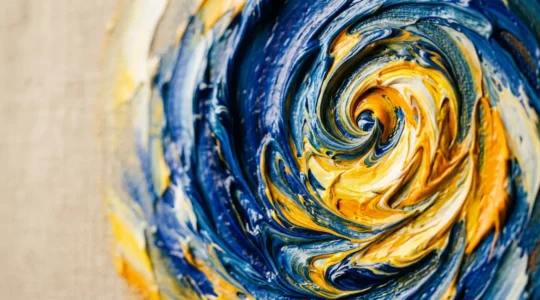
Did Van Gogh Paint the Stars, or the Hidden Physics of a Turbulent Mind?
Beyond the myth of madness, The Starry Night reveals Van Gogh as a methodical observer who intuitively captured the fundamental laws of physics and perception in his brushstrokes. The painting’s iconic swirls perfectly match mathematical models of turbulent flow, a…
Lire la suite
Why Is Picasso’s Guernica a Stark Monochrome Instead of Bloody Red?
Picasso’s choice of a black and white palette for Guernica was not merely for mood; it was a deliberate strategy to transform the painting into a piece of stark, irrefutable evidence. By rejecting the aesthetic distraction of color, especially blood-red,…
Lire la suite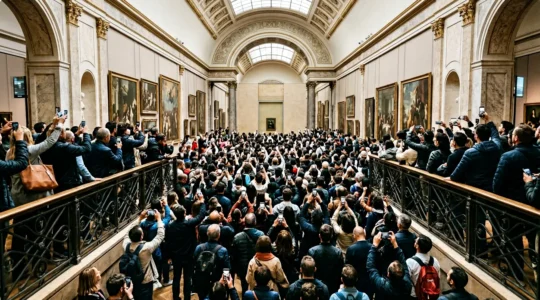
Why Does the Mona Lisa Attract 10 Million Visitors a Year?
Most believe the Mona Lisa’s fame stems purely from its artistic merit. The truth is far more fascinating. Its global celebrity is a modern social phenomenon, a perfect storm of revolutionary psychological art, a history-making theft that triggered mass media…
Lire la suite
How Did Van Gogh Turn a Cypress Tree Into a Symbol of Death?
Van Gogh transformed the cypress from a simple tree into a symbol of death by not just painting an object, but by engineering a feeling of profound anxiety directly onto the canvas. The common belief is that he painted cypresses…
Lire la suite
Who Decides Which Paintings Become « Masterpieces » and Why?
A « masterpiece » is not an inherent quality of a painting but a social and economic construct, manufactured by a network of historical accidents, market forces, and institutional power that we can actively deconstruct. Media narratives, like the coverage of the…
Lire la suite