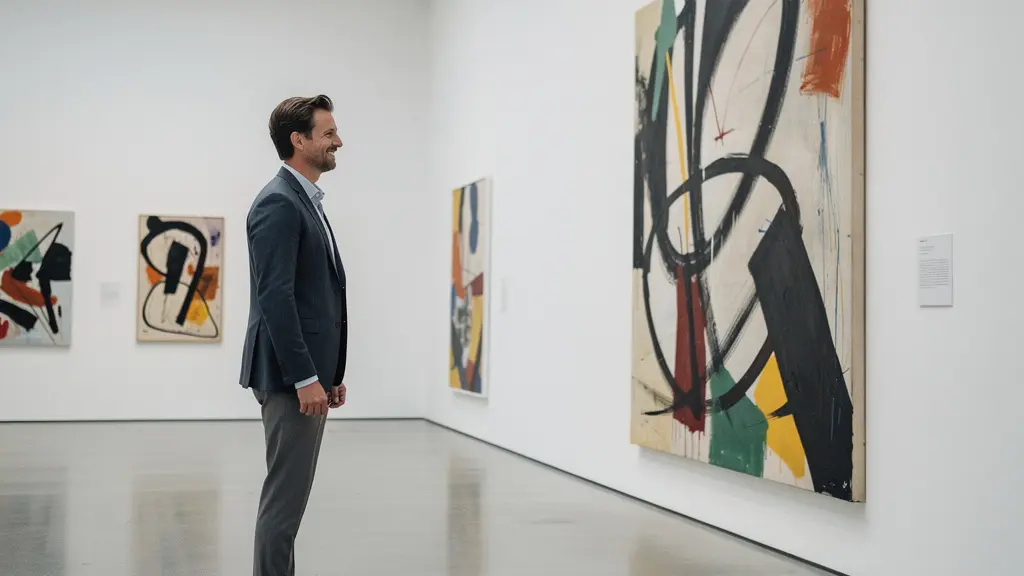
Contrary to popular belief, feeling intimidated by an art gallery isn’t a personal failing; it’s a reaction to a system designed to be opaque. The key isn’t to learn secret rules, but to understand the commercial logic behind them.
- Hidden prices aren’t meant to exclude you, but to start a valuable conversation about the art.
- “Sold out” shows often use red dots as a marketing tool to create urgency and validate an artist’s market.
Recommendation: Shift your mindset from a nervous guest to an informed observer. By understanding the gallery’s business, you gain the confidence to engage with the art and staff on your own terms.
Walking into a sleek, silent commercial art gallery can feel like stepping into an exclusive club where you don’t know the password. The stark white walls, the lack of price tags, the impeccably dressed staff—it all seems designed to make anyone who isn’t a seasoned collector feel out of place. Many art lovers, brimming with passion and curiosity, simply stay away, convinced these spaces are not for them unless they arrive with a platinum credit card and an art history degree. This feeling of intimidation is real, but it’s built on a misunderstanding.
The common advice—”just be yourself,” “ask questions”—often falls flat because it ignores the root of the anxiety. You’re not just looking at art; you’re in a high-end retail environment. The secret to navigating it with confidence isn’t about memorizing a complex etiquette guide. It’s about understanding the gallery’s business model. These spaces are not museums; they are businesses with specific goals, and their practices, from hidden prices to exclusive opening nights, are driven by a clear commercial logic.
But here’s the revealing part: that logic increasingly includes people just like you. The art market is actively seeking new buyers and enthusiasts. This guide will pull back the curtain on the gallery world. Instead of giving you a list of rules to follow, we will decode the “why” behind the gallery’s methods. You’ll learn the difference between primary and secondary markets, the real purpose of a vernissage, the mechanics of artificial scarcity, and how to talk to a gallery director. By the end, you will no longer feel like an outsider but an informed observer, ready to explore with curiosity and confidence.
This article provides a complete roadmap, from your first visit to your first purchase. The following sections break down the unspoken rules and strategies of the art world to empower your gallery experience.
Summary: Demystifying the Commercial Art Gallery Experience
- Why Do Art Galleries Hide Prices and Require Inquiries?
- Primary or Secondary Gallery: Where Should You Look for New Talent?
- What Is the Protocol for Attending a Vernissage if You Don’t Buy?
- The “Sold Out” Trick Galleries Use to Create Artificial Scarcity
- When Is the Best Time to Visit a Gallery to Talk to the Director?
- How to Buy Your First Gallery Piece Without Overpaying in Commissions?
- Gallery Original or Market Souvenir: Which Fits a Sophisticated Interior?
- How to Build a Fine Arts Portfolio With a $50,000 Starting Budget?
Why Do Art Galleries Hide Prices and Require Inquiries?
The single most intimidating element in a commercial gallery is the absence of price tags. It’s a deliberate choice, but its purpose is not to exclude you. Instead, it’s a strategy to initiate a conversation. In the art world, a piece’s value is built on its story, context, and the artist’s career trajectory. Hiding the price forces a potential buyer to engage with a gallery attendant, creating an opportunity for the staff to share that crucial information. It filters out casual browsers from serious prospects and allows the gallery to build a relationship. This is a key part of the commercial logic: the sale begins with a connection, not a price tag.
This approach is surprisingly welcoming to new collectors. In fact, the market is more open than ever, with a recent report confirming that 38% of gallery sales went to first-time buyers in 2024. When you ask for the price, you are not making a commitment to buy; you are sending a value signal that you are an engaged viewer. It opens the door for the gallery to add you to their mailing list and inform you about future exhibitions, transforming you from an anonymous visitor into a known contact. The price inquiry is your entry point into the gallery’s ecosystem.
Your Action Plan: How to Navigate the Price Inquiry
- Show genuine interest: First, ask the gallery attendant about the artist’s background and market position, not just the price.
- Collect context: Inquire about the piece’s place in the artist’s work, e.g., “Is this from their recent series?”
- Express your connection: Share what draws you to the piece before asking about its cost to signal you are a serious viewer.
- Understand the relationship: When discussing the price, ask about how long the gallery has represented the artist.
- Become a contact: Request to be added to their mailing list for future events, moving from visitor to potential collector.
By following these steps, you reframe the interaction. You are no longer just asking “how much?” but demonstrating an intelligent interest that galleries value highly, whether you purchase something that day or not.
Primary or Secondary Gallery: Where Should You Look for New Talent?
Not all galleries are the same. Understanding the difference between the primary and secondary markets is fundamental to becoming an informed observer. The primary market is where art is sold for the first time. These are typically the galleries that represent living artists, taking work directly from their studios to the public. This is the frontline of the art world, the place for discovery, and where you can find new talent before their prices skyrocket.
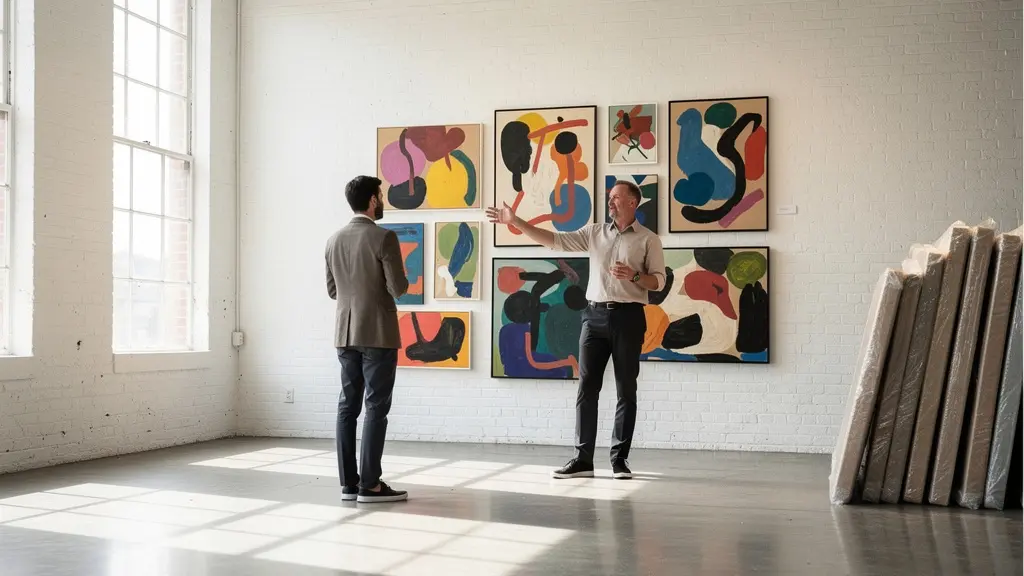
Visiting a primary gallery gives you a chance to be part of an artist’s journey from the beginning. The risk is higher, as an emerging artist’s career is not guaranteed, but the potential reward—both financially and emotionally—is significant. The speculative nature of this market has seen fluctuations; after a peak in 2022, spending on young contemporary artists at major auction houses saw a 71% decline by 2024, showing how volatile this sector can be. In contrast, the secondary market is where art is resold. This includes auction houses and galleries that deal in works by established or deceased artists, purchased from collectors, estates, or other dealers. Here, the artists have a proven track record, making it a less risky but more expensive arena.
This table breaks down the key differences to help you decide where to focus your attention.
| Aspect | Primary Market | Secondary Market |
|---|---|---|
| Artist Representation | Direct from artist’s studio | Resale from collectors |
| Price Range | Entry-level to mid-range | Established, often higher |
| Risk Level | Higher risk, higher potential reward | Lower risk, proven track record |
| Discovery Potential | First access to new work | Established artists only |
| Gallery Size | Often smaller, specialized spaces | Major international galleries |
For someone starting out, primary market galleries are the most accessible and exciting places to explore. They are actively looking to cultivate new collectors and are often more open to educational conversations.
What Is the Protocol for Attending a Vernissage if You Don’t Buy?
The “vernissage,” or opening night, can be the most socially daunting gallery experience. It’s crowded, buzzing with conversation, and it seems like everyone knows each other. The fear is that you’ll be judged for being there just for the free wine, with no intention of buying. This is a common anxiety, but it’s largely unfounded. A vernissage serves multiple purposes for a gallery, and selling art on the spot is only one of them. Its primary function is to generate buzz, celebrate the artist, and allow the gallery’s community of collectors, critics, and curators to see the new work. Your presence contributes to that energy.
As a non-buyer, your role is that of an enthusiastic and engaged guest. As art writer Malcolm Fernandes notes, these events are often more relaxed than a quiet weekday visit. In his guide for beginners, he explains:
Art openings often have a festive, relaxed atmosphere, with drinks and hors d’oeuvres, and sometimes the artists themselves are present to discuss their work. These events are less formal than regular gallery visits and can make it easier to connect with the art (and other visitors).
– Malcolm Fernandes, Art Galleries — The Ultimate Guide for Beginners
To feel comfortable, focus on engaging with the art, not the sale. Arrive, sign the guestbook (this gets you on the list for future events), and pick up the press release. Spend a solid 20-30 minutes looking at the work before you socialize. If you get a chance, introduce yourself to the gallerist with a specific, positive comment about the exhibition. Asking a thoughtful question about the artist’s process is far more valuable than asking about the price. Following up with a brief email the next day mentioning a piece you admired is a powerful way to build a relationship for the future.
The “Sold Out” Trick Galleries Use to Create Artificial Scarcity
You walk into a gallery on opening night and see little red dots next to half the artworks. The show is already a “sell-out.” Your immediate thought might be, “I’m too late,” or “This is out of my league.” This is exactly the intended effect. The red dot is one of the most effective tools in the gallery’s arsenal for creating artificial scarcity. While many of those sales are genuine, the “sold out” phenomenon is often a carefully orchestrated piece of marketing. It sends a powerful message: this artist is in high demand, their market is hot, and you should get in on the action before it’s truly too late.
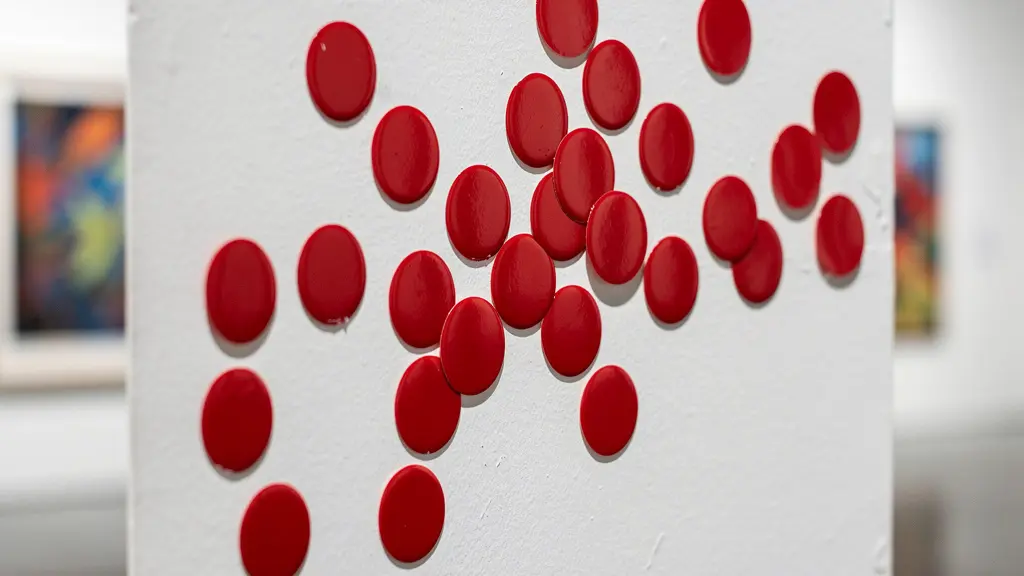
These sales are often secured well before the doors open. Galleries will send a digital preview to their top collectors, who get first pick. By the time the public vernissage begins, a significant portion of the show may already be spoken for. This isn’t just about selling work; it’s about building an artist’s career. A sold-out show generates press, boosts the artist’s confidence, and justifies price increases for their next exhibition. It’s a crucial part of the scarcity mechanics that drive the contemporary art market, a world where perceived value is everything.
Even at major art fairs, the appearance of a frenzy of sales is paramount, regardless of the broader economic climate. This buzz is sometimes supported by complex financial arrangements, as major auctions are now dominated by third-party guarantees, where a sale is secured before the bidding even starts. As an informed observer, when you see a wall of red dots, don’t be discouraged. Instead, see it for what it is: a sign of a successful marketing strategy. Use it as a learning opportunity. Ask which pieces were sold to institutions versus private collectors. Inquire if there is a waiting list for the artist’s next body of work. This shows you understand the game and are thinking long-term.
When Is the Best Time to Visit a Gallery to Talk to the Director?
While a vernissage is great for seeing and being seen, it’s the worst time for a meaningful conversation. To truly connect with the gallery staff and the art, timing is everything. The ideal moment to visit is on a weekday afternoon, typically a Tuesday, Wednesday, or Thursday, about two to three weeks into an exhibition’s run. By then, the initial rush of the opening has subsided, and the staff is more relaxed and available for discussion. The final week of a show should also be avoided, as the team is often busy with de-installation and preparing for the next exhibition.
Mornings, right when the gallery opens, can also be a quiet and productive time for a visit. If you have specific questions or are seriously considering a purchase, it’s always best to email ahead and request a brief appointment. Asking for 15 minutes of a gallerist’s time to discuss your collecting interests shows professionalism and respect for their schedule. This proactive approach immediately positions you as a serious individual, not just a casual walk-in. Some galleries may even rotate artworks mid-exhibition, so a return visit can sometimes reveal new pieces that weren’t on display initially.
When you do visit, remember the one golden rule. As Kathy Huang, a managing director at the renowned Jeffrey Deitch gallery, emphasizes, the biggest faux pas has nothing to do with what you say:
You would be surprised by how many people, especially in a sculpture show, do touch things.
– Kathy Huang, Jeffrey Deitch Gallery
Beyond that, the staff wants you to feel welcome. They are passionate about their artists and are generally happy to share that passion. A quiet afternoon, a few thoughtful questions, and keeping your hands to yourself is the perfect recipe for a successful and enjoyable gallery visit.
How to Buy Your First Gallery Piece Without Overpaying in Commissions?
The thought of buying your first piece of art from a gallery can be nerve-wracking, with fears of hidden costs and complex negotiations. Here’s the most important thing to understand: in the primary market, the price is typically non-negotiable, and you are not “overpaying” in commissions. The retail price you are quoted is a firm figure that has been set in agreement between the artist and the gallery. This price already includes the gallery’s commission, which is almost always a 50/50 split with the artist. You don’t pay an extra fee on top of the ticket price; you pay the ticket price, and the gallery and artist divide it.
This 50% commission covers the gallery’s significant overheads: rent for a prime location, staff salaries, marketing for exhibitions, shipping costs, art fair participation, and the financial investment made in building the artist’s career. By buying from a reputable primary gallery, you are not just acquiring an object; you are supporting an entire ecosystem that allows artists to create. The key is not to haggle, but to ensure you are buying from a place that adds real value.
The best opportunities for first-time buyers are often found at smaller, younger galleries. These venues are actively cultivating the next generation of collectors. Recent data shows that dealerships with turnovers under $250,000 saw a 17% boost in sales, driven by new buyers. These smaller galleries are where you can build personal relationships with the directors and often get in on the ground floor with a rising artist. Instead of trying to get a discount, focus on getting the best provenance—a complete record of the artwork’s history—which is essential for its long-term value.
Gallery Original or Market Souvenir: Which Fits a Sophisticated Interior?
Once you start thinking about acquiring art, a new question emerges: should you invest in an original piece from a gallery or opt for a high-quality but mass-produced “market souvenir”? While a framed poster from a museum gift shop can be beautiful, an original work of art—even a small one—brings a unique energy and story into your home. It’s a direct connection to the artist’s hand and vision. A sophisticated interior is not just about aesthetics; it’s about curation and personal expression. An original artwork is a statement of intent, a reflection of your taste, and an asset that can appreciate in value.
The decision is not just about budget, but about adopting a portfolio mindset. You are not merely decorating; you are starting a collection. This approach is being embraced by a new generation, with data showing that 46% of art collectors are now aged 18-39. A good strategy can be to mix different types of art. You could anchor your collection with one significant original piece from a primary gallery and supplement it with high-quality, limited-edition prints from more established artists. This allows you to balance cost while still focusing on quality and provenance.
The art market is complex, and its value is not always tied to predictable metrics. As Noah Horowitz, the CEO of Art Basel, wisely points out, the market is ultimately about human connection and the uniqueness of the object. He states:
There’s a desire to overanalyze market prognostics like interest rates and geopolitical events, but it’s not a perfect science. The market is human-to-human movements, and it’s also about unique objects.
– Noah Horowitz, Chief Executive of Art Basel
When choosing a piece for your home, think about its story, its place in the artist’s career, and your personal connection to it. An original work from a gallery offers a depth of meaning and a potential for growth that a souvenir can never match. It transforms your space from a decorated room into a curated environment.
Key Takeaways
- Gallery intimidation is common but can be overcome by understanding the commercial logic behind gallery practices.
- Asking for a price is not a commitment to buy; it’s an invitation to a conversation that galleries welcome.
- Focus on primary market galleries for new talent and building relationships, and attend vernissages to engage, not just to buy.
How to Build a Fine Arts Portfolio With a $50,000 Starting Budget?
For those ready to move from a single purchase to deliberate collecting, a starting budget of $50,000 opens up significant possibilities in the contemporary art market. The key to success is not just spending the money, but allocating it strategically based on your goals and risk tolerance. Adopting a portfolio mindset means thinking like an investor, balancing your acquisitions to create a collection that is both personally meaningful and financially sound. You are not just buying what you love; you are building a cohesive group of assets.
With a $50,000 budget, you could acquire one or two significant works from a mid-career artist, or you could diversify across five to ten pieces by promising emerging artists from different primary galleries. The latter strategy spreads your risk and increases your chances of backing an artist whose career takes off. There is no single “right” way to allocate your funds; it depends entirely on your personal collecting philosophy. The most common approaches balance risk between established names and new discoveries.
The following table outlines four common strategies for allocating a $50,000 starting portfolio, each with a different focus and risk level.
This framework provides clear models for how a new collector can approach the market with a starting budget of $50,000, balancing risk and potential reward.
| Strategy | Allocation | Focus | Risk Level |
|---|---|---|---|
| Conservative | 70% established, 30% emerging | Blue-chip prints & multiples | Low |
| Balanced | 50% established, 50% emerging | Mix of originals and editions | Medium |
| Growth-Oriented | 30% established, 70% emerging | Primary market originals | High |
| Thematic Focus | 100% specific movement/medium | Deep expertise in one area | Variable |
Building a collection is one of the most rewarding journeys an art lover can undertake. It requires research, patience, and a willingness to trust your own eye. By starting with a clear strategy, you can build a portfolio that reflects your unique vision and has the potential to grow in value over time.
Your journey into the art world starts with a single step. Armed with this knowledge, you are ready to walk into any gallery not as an intimidated visitor, but as a confident and informed observer. Start exploring the galleries in your city today.