The most significant investment opportunities are not in chasing current trends, but in identifying historical art periods experiencing structural undervaluation before a market correction.
- Taste is cyclical; categories like Mid-Century Modern have soared while once-valuable Victorian “brown furniture” has plummeted, revealing predictable patterns.
- True undervaluation is often found in niches with high barriers to entry, such as Old Master drawings or works requiring scholarly re-evaluation, not in over-hyped contemporary sectors.
Recommendation: Instead of asking “what” is cheap, focus on “why” it’s cheap by analyzing market mechanics, taste cycles, and the potential for academic rediscovery.
For investors looking to enter the art market, the question of “what to buy” often leads to a confusing mix of advice. The common refrain to “buy what you love” is sound for a personal collector but insufficient for someone seeking financial returns. The headlines are dominated by record-breaking sales of blue-chip contemporary art, creating the impression that the market is inaccessible. Yet, the real opportunity often lies hidden in plain sight, within historical periods that the market has temporarily forgotten or misjudged.
The key to identifying these opportunities is to stop looking for a single undervalued artist and start recognizing the structural signals that indicate an entire category is poised for revaluation. This involves understanding the mechanics of the market: the cyclical nature of aesthetic taste, the impact of new scholarship, and the difference between a temporary fad and a genuine price correction. The art market is not just about aesthetics; it’s a complex ecosystem where information, perception, and timing are paramount.
But if the secret isn’t a specific artist or period, what is it? The true analytical approach is to understand the market dynamics that create undervaluation in the first place. It’s about recognizing that the decline of one style, like Victorian furniture, is directly linked to the ascent of another, like Mid-Century Modern. It’s about knowing that a $10,000 budget can unlock entirely different levels of quality and risk depending on whether you are looking at the 19th century or the world of Old Masters.
This article will guide you through these market mechanics. We will dissect the factors that cause value shifts, analyze entry points at different budget levels, and provide a framework for identifying both opportunity and risk. By the end, you will have a new lens through which to view the art market—one focused on predictive signals rather than reactive trends.
To navigate these complex market dynamics, we will explore the key indicators of value and risk across different segments. This analysis provides a strategic roadmap for identifying genuine opportunities before they become mainstream.
Summary: Decoding Undervaluation in the Art Market
- Why Victorian Art Is Losing Value While Mid-Century Modern Skyrockets?
- Old Masters vs. 19th Century: Which Offers Better Entry Points for $10k?
- The Danger of Buying Into a “Rediscovered” Period at Peak Hype
- When Is the Best Month to Buy Old Master Paintings at Auction?
- How to Insure fragile Renaissance Panels Compared to Modern Canvas?
- Why Blue-Chip Art Retains Value During Economic Recessions?
- When Did Hasui Prints Become More Expensive Than Hiroshige?
- How to Build a Fine Arts Portfolio With a $50,000 Starting Budget?
Why Victorian Art Is Losing Value While Mid-Century Modern Skyrockets?
The dramatic reversal of fortunes between Victorian and Mid-Century Modern (MCM) aesthetics offers a masterclass in taste cycles. For decades, heavy, ornate Victorian “brown furniture” was a staple of aspirational homes and a perceived stable asset. Today, its value has collapsed. A mahogany dining table insured for several thousand pounds in the 1990s might sell for only a few hundred today, often less than its flat-pack modern equivalent. This isn’t a reflection of quality but a fundamental shift in lifestyle and aesthetics. Modern homes are smaller, and tastes have moved towards minimalism, light, and functionality—the very ethos of MCM design.
Conversely, the clean lines and honest materials of MCM have seen their value skyrocket. Once relegated to thrift stores, a simple 1960s teak sideboard can now command premium prices at auction. This demonstrates a core principle for investors: market value is driven by contemporary demand, not just historical significance or craftsmanship. As one estate expert from True Legacy Homes notes, “Any piece that can be defined as mid-century modern has more market value than the average old desk.”
This phenomenon is not random; it is a structural re-evaluation driven by generational change. The generation that coveted Victorian furniture is downsizing, flooding the market with supply. Meanwhile, younger generations, influenced by design magazines and a minimalist ethos, are driving demand for MCM. For an investor, the key takeaway is to analyze the demographic and lifestyle trends that underpin aesthetic preferences. An “undervalued” period may simply be one that is out of sync with current living, while a “booming” period is one that perfectly aligns with it.
Old Masters vs. 19th Century: Which Offers Better Entry Points for $10k?
With a defined budget of $10,000, an investor faces a critical choice between established but complex categories. The decision between acquiring an Old Master work or a 19th-century piece reveals fundamental differences in risk, attribution, and potential upside. This price point in the Old Master market typically offers access to works attributed as “Circle of” or “Follower of” a major artist. While connected to a great name, the direct link is absent, creating a high attribution risk that requires deep expert knowledge to navigate.
The 19th-century market, in contrast, offers a more direct entry. For the same budget, it is possible to acquire signed, original works by well-documented, albeit minor, masters. The paper trail is often clearer, and the condition is generally better preserved, reducing the risks associated with centuries of restoration and environmental damage. The visual comparison between the aged, textured paper of a Renaissance drawing and the crisp surface of a 19th-century etching highlights these material differences.
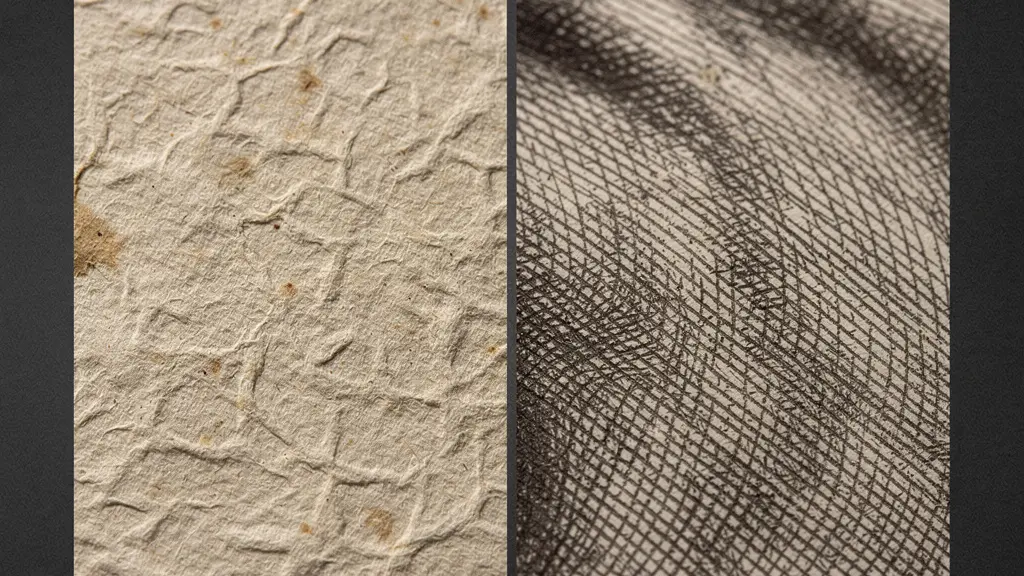
The following table, based on recent market analysis, breaks down the key considerations for an investor. As an analysis of undervalued market segments shows, the choice is between the stable, but limited, prestige of the Old Master-adjacent market and the potential for growth in the 19th-century sphere, where artists are still being rediscovered.
| Category | Old Masters | 19th Century |
|---|---|---|
| Typical Work Available | ‘Circle of’ or ‘Follower of’ attributions | Signed original works by minor masters |
| Attribution Risk | High – requires expert knowledge | Lower – clearer documentation |
| Condition | Often restored or compromised | Generally better preserved |
| Market Trajectory | Stable but limited upside | Growth potential for rediscoveries |
| Learning Curve | Steep – broad knowledge required | More focused – specific schools |
For an investor, the 19th century often presents a more logical entry point. The learning curve is less steep, and the potential for a “rediscovered” artist to see a significant price correction is a tangible possibility, offering a more attractive risk/reward profile than a tertiary work from a famous Renaissance workshop.
The Danger of Buying Into a “Rediscovered” Period at Peak Hype
The thrill of a “rediscovered” artist or movement can create a speculative frenzy, but for an investor, this is the most dangerous time to buy. When a niche category transitions from academic interest to mainstream hype, prices often detach from fundamental value, creating a bubble. The market for young contemporary artists provides a stark warning; after a period of intense speculation, auction sales for young contemporary artists have seen a steep drop, contracting by 71% between 2022 and 2024. This is a classic price correction after a period of overheating.
Recognizing the peak of a hype cycle is a critical skill. It’s the moment when the narrative shifts from “undervalued” to “must-have,” and the buyers are no longer specialists but generalist investors and trend-followers. Signals of peak hype include widespread coverage in non-art media, a sudden proliferation of gallery shows, and auction results consistently soaring far above their high estimates. This is speculation, not investment.
To avoid this trap, an investor needs a disciplined framework for assessing market sentiment. The following checklist provides a “Hype Saturation Index” to gauge whether a market is overheated. A high score across these points should be a major red flag, signaling that the opportunity for finding undervaluation has likely passed and the risk of a downturn is high.
Your Hype Saturation Index Checklist
- Check non-art media mentions: Is the artist or movement featured in publications like Vogue or The Wall Street Journal? Excessive coverage indicates peak hype.
- Count celebrity collectors: How many high-profile celebrities are publicly associated with the movement? This often signals a trend has reached its zenith.
- Compare auction results to estimates: Are works consistently selling for 40% or more over their high estimates? This indicates an overheated, speculative market.
- Track gallery representation changes: Has there been a sudden proliferation of galleries, especially major ones, taking on artists from this movement? This points to speculation.
- Monitor social media trending: Have viral moments or trends on platforms like Instagram and TikTok propelled the artist to fame? This often marks the peak before a decline.
The goal is not to avoid rediscovered periods altogether, but to enter before the hype. The real value is captured during the phase of scholarly re-evaluation, not during the subsequent media frenzy. By the time an artist is a celebrity favorite, the smart money has already moved on.
When Is the Best Month to Buy Old Master Paintings at Auction?
Beyond “what” to buy, the question of “when” to buy is a crucial tactical consideration, especially in established markets like Old Master paintings. The art market, like any other, is subject to seasonal cycles. The major auction seasons in May (New York) and June/July (London) are when the highest-value, most-marketed works come to sale. While this period generates excitement, it also brings maximum competition, often leading to higher prices.
The real opportunities for an investor often lie in the quieter periods of the auction calendar. The months of August and January, for instance, are typically off-season. Fewer high-profile sales mean less competition and more attention from specialists. More importantly, these lulls are when dealers and other sellers may be more motivated to transact privately to free up capital or refine their inventory before the next major season begins. The quiet, empty auction room is where strategic preparation happens, away from the frenzy of the main event.
This insight into market timing offers a significant edge. As one art market analyst from Bank of America’s Private Bank points out, the periods just before a major auction push can be ripe for strategic acquisitions.
The quietest periods are often 4-6 weeks before a major auction season begins, when dealers are willing to make private sales to free up capital.
– Art market analyst, Bank of America Private Bank Art Market Analysis
An investor should therefore track the auction calendar not to participate in the biggest sales, but to identify the windows of opportunity around them. Building relationships with dealers and auction house specialists during these off-peak times can provide access to works before they hit the public market, often at more favorable terms. This proactive, counter-cyclical approach is a hallmark of sophisticated art investment.
How to Insure fragile Renaissance Panels Compared to Modern Canvas?
The purchase price is only the beginning of an art investment. The ongoing cost of ownership—particularly insurance—can dramatically impact the total return, and this cost varies wildly depending on the medium. A fragile Renaissance painting on a wood panel and a modern work on canvas may have the same market value, but their insurance profiles are worlds apart. This is due to a concept known as “inherent vice”.
Insurers classify Renaissance panels as having inherent vice because the wood is intrinsically susceptible to damage from environmental changes. Humidity fluctuations can cause the panel to crack, warp, or split, while the gesso and paint layers can flake. This risk necessitates museum-grade climate control systems, specialized transport, and significantly higher insurance premiums. These are not optional extras; they are mandatory conditions for securing coverage, and the costs can run into thousands of dollars annually.
A modern canvas, by contrast, is a far more stable object. While still requiring care, it is less vulnerable to common environmental shifts. This lower risk profile translates directly into lower costs across the board. The following table, based on industry appraisal data, highlights the stark differences in these ongoing financial commitments.
Understanding these distinctions is crucial for calculating the true cost of an investment, as shown in this comparative analysis of insurance factors.
| Insurance Factor | Renaissance Panel | Modern Canvas |
|---|---|---|
| Premium Rate | 2.5-4% of value annually | 0.5-1.5% of value annually |
| Climate Control | Museum-grade mandatory | Standard HVAC acceptable |
| Title Insurance | Critical – complex provenance | Less critical – clearer history |
| Restoration Cost Factor | Can exceed 50% of value | Typically 10-20% of value |
| Transport Requirements | Climate-controlled, specialized | Standard fine art shipping |
For an investor, this means a $50,000 Renaissance panel could have carrying costs that are four or five times higher than a $50,000 modern canvas. This hidden expense can erode returns over time. Therefore, an undervalued work on a fragile support may not be an undervalued investment once the total cost of ownership is factored in. The material nature of the artwork is a fundamental, non-negotiable part of the financial equation.
Why Blue-Chip Art Retains Value During Economic Recessions?
During times of economic uncertainty and market volatility, many investors turn to tangible assets as a store of value. Within the art market, this “flight to quality” phenomenon overwhelmingly benefits blue-chip art—works by historically significant, internationally recognized artists with a long track record of auction sales. These pieces function as a “safe haven” asset class because their value is underpinned by a deep and stable collector base, extensive scholarly research, and institutional validation through museum collections.
Even as other market segments contract, the very top of the market often demonstrates remarkable resilience. For example, during a period of broader market anxiety in 2024, René Magritte’s L’empire des lumières sold at Christie’s for $121 million, meeting its high estimate. This is not an anomaly. It’s evidence that in turbulent times, capital consolidates around assets with unquestionable provenance and historical importance. Buyers are willing to pay a premium for the certainty that these masterworks represent.
This stability is also reflected in market-wide metrics. A Bank of America report noted that in 2024, sell-through rates across major auction houses actually increased from 82% to 84%, the highest rate since 2017. This indicates that even in a cautious environment, buyers and sellers of high-quality art were able to agree on prices, demonstrating market equilibrium and confidence. The value of blue-chip art is not immune to gravity, but its deep roots in art history provide a powerful anchor that speculative, trend-driven categories lack.
For an investor, this means that while the hunt for undervaluation often focuses on emerging or overlooked areas, a core holding of blue-chip works (or prints and editions by blue-chip artists for those with smaller budgets) can provide crucial portfolio stability during a downturn.
When Did Hasui Prints Become More Expensive Than Hiroshige?
The story of Kawase Hasui and Utagawa Hiroshige is a perfect case study in scholarly re-evaluation and how it can completely invert market hierarchies. For decades, Hiroshige was considered the undisputed ukiyo-e master of landscape prints, and Hasui, working in the early 20th century, was seen as a talented but lesser successor. Consequently, Hiroshige’s prints consistently commanded higher prices. This reflected a market that valued the “original” masters of a movement over its later practitioners.
However, over the past two decades, a significant shift has occurred. As specialists and museums began to champion the Shin-Hanga (“New Prints”) movement, Hasui was re-contextualized. As one Asian art specialist noted, “The market stopped viewing Hasui as a lesser successor to Hiroshige and started seeing him as the quintessential master of the Shin-Hanga movement.” He was no longer a follower but a pioneer in his own right, celebrated for his use of Western perspective and nostalgic, atmospheric scenes that captured a romanticized vision of a changing Japan.
This critical reappraisal had a direct financial impact. Demand for Hasui’s work surged, particularly as the broader art market’s focus expanded. Today, with a landscape where Asia accounts for approximately 40% of the global art market, the appreciation for culturally specific modern masters has intensified. It is now common for a top-quality, lifetime-edition Hasui print to sell for more than a comparable, later-state Hiroshige print. The “student” has, in many cases, surpassed the “master” in value. This reversal was not driven by a marketing campaign, but by a slow, organic process of academic research, museum exhibitions, and a shift in collector taste toward the unique qualities of the Shin-Hanga period.
For an investor, this demonstrates that “historical importance” is not static. An artist or period that is currently considered secondary could be just one major museum retrospective or scholarly publication away from a complete market revaluation.
Key Takeaways
- Market value is driven by contemporary taste cycles and lifestyle alignment, not just historical importance or craftsmanship.
- Lower budget entry points often offer better risk/reward profiles in well-documented but less-hyped categories (e.g., 19th Century) than in high-risk “follower of” categories (e.g., Old Masters).
- True investment opportunities lie in identifying undervalued periods before mainstream hype; by the time a movement is in the news, the best value is gone.
How to Build a Fine Arts Portfolio With a $50,000 Starting Budget?
Building a fine arts portfolio on a $50,000 budget requires a disciplined, strategic approach that moves beyond chasing single trophy pieces. The most effective method is the Core-Satellite strategy, which balances stability with growth potential. This involves allocating the majority of capital to a stable, blue-chip asset while using smaller portions to speculate on higher-growth, higher-risk areas. This structured approach mitigates risk while allowing for the potential upside that comes from identifying undervalued works.
The “Core” of the portfolio should be a single, high-quality work that acts as an anchor. For $30,000 (60% of the budget), this could be a print, work on paper, or a multiple by an established, blue-chip artist like Warhol, Picasso, or Hockney. This piece is not expected to skyrocket in value, but it is expected to hold its value and provide stability and liquidity to the portfolio.
The “Satellite” portions are used for targeted growth. This involves diversifying into areas with higher potential for a price correction. The goal is not broad diversification across many artists, but rather to build depth in a specific, well-researched niche. The sub-$5,000 “middle market” is particularly fertile ground, having shown consistent 7% growth in recent years. A successful strategy might look like this:
- Core (60% / $30,000): Allocate to one “trophy” blue-chip print or drawing for stability. This is your anchor asset.
- Satellite 1 (25% / $12,500): Invest in 2-3 works by emerging artists represented by established, reputable galleries. This provides exposure to potential breakout stars.
- Satellite 2 (10% / $5,000): Acquire several works on paper from a historically undervalued period you have researched (e.g., 19th-century academic drawings or Shin-Hanga prints).
- Liquidity (5% / $2,500): Keep this portion liquid for opportunistic purchases at off-season auctions or private sales.
This structured approach transforms art acquisition from a series of disconnected purchases into a cohesive investment strategy. It forces the investor to think in terms of risk allocation and to focus research on specific market segments where undervaluation is most likely to be found.
By adopting this analytical framework—focusing on market mechanics, taste cycles, and strategic portfolio construction—an investor can move beyond the headlines and begin to identify genuine, sustainable value in the art market. The next logical step is to apply this knowledge to your specific financial goals and risk tolerance.