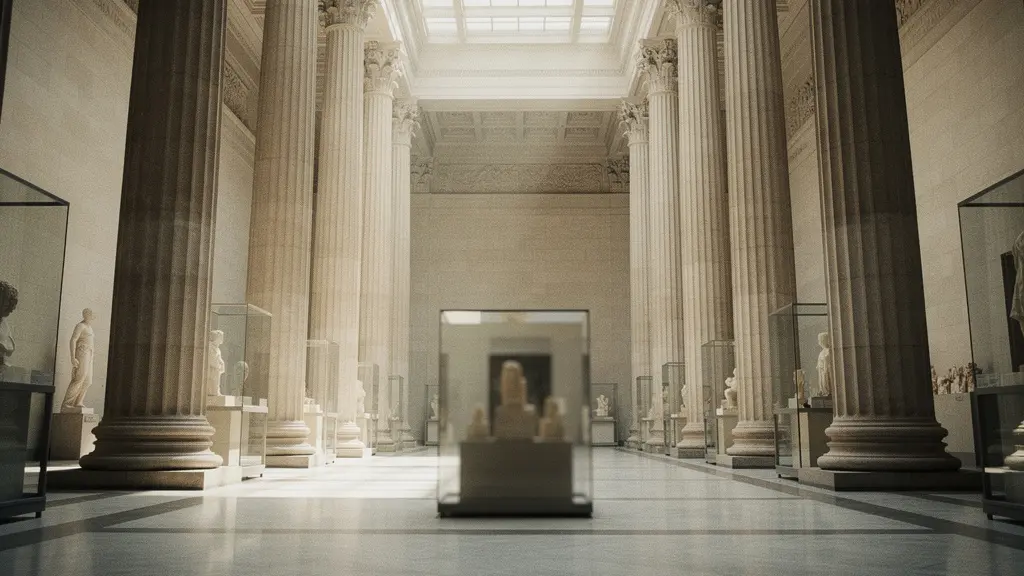
The mounting pressure on museums to return artifacts isn’t simply about righting historical wrongs; it’s exposing a fundamental breakdown of the “universal museum” model and its custodial frameworks.
- Institutional and legal structures, not just curatorial reluctance, often represent the biggest hurdles to repatriation.
- Displaying objects without community context can strip them of their sacred meaning, perpetuating a form of cultural harm.
Recommendation: To truly grasp the issue, one must move beyond a simple “keep vs. return” binary and examine the emerging collaborative models that prioritize cultural justice and shared meaning.
A quiet unease is settling over the grand halls of Western museums. For generations, we have walked past gleaming cases holding Mesopotamian tablets, Egyptian sarcophagi, and African masks, accepting them as silent testaments to a shared human history. The dominant narrative was one of preservation and universal access—these institutions were seen as neutral guardians, rescuing fragile treasures for the benefit of all humanity. If questions arose about an object’s origin, the conversation was often deflected with arguments about superior conservation capabilities and the vast audiences these global centers could reach.
Yet, this comfortable consensus is shattering. The calls for repatriation are growing louder, more organized, and more successful than ever before. But to dismiss this as a simple trend or a matter of political correctness is to miss the profound shift occurring within the world of art and culture. The real story isn’t just about who owns what. It’s about a fundamental clash between the 19th-century custodial frameworks upon which these museums were built and the 21st-century’s demand for active cultural justice. What if the very act of “preserving” an object has, in some cases, been a process of stripping it of its meaning? This article explores not just the ‘why’ of repatriation, but the ‘how’—how the intricate mechanics of museum practice, from conservation to curation, are being challenged and radically reimagined.
This exploration will navigate the complex arguments and hidden realities of the museum world. We will dissect the conservation claims, weigh the concept of a ‘universal museum’ against the rights of source communities, and question whether digital copies can ever be enough. By examining the biases in exhibition narratives and the legal frameworks that create institutional inertia, we can begin to understand the full scope of this pivotal moment.
Summary: Why Are Western Museums Facing Pressure to Return Artifacts Now?
- How Do Museums Stop Ancient Organic Materials From Disintegrating?
- Universal Museum vs. Source Community: Who Should Own Heritage?
- Can Digital Replicas Satisfy the Need for Repatriation of Artifacts?
- The Display Error That Strips Sacred Objects of Their Meaning
- How Do Museums Manage the 90% of Collections Hidden in Storage?
- The Bias Trap That Can Skew the Historical Accuracy of a Show
- Why Must All Modern Restoration Techniques Be Fully Reversible?
- How Does a Curator Decide the Narrative of a Blockbuster Exhibition?
How Do Museums Stop Ancient Organic Materials From Disintegrating?
The foundational argument for keeping artifacts in Western museums has long been one of superior stewardship. The technical expertise involved in halting the decay of delicate materials—wood, textiles, papyrus—is presented as a core function. Conservators employ a sophisticated arsenal of techniques, including precise climate control to regulate temperature and humidity, anoxia treatments to eliminate pests, and painstaking chemical stabilization. This narrative of rescue and preservation is powerful, suggesting that removal was a necessary act to save items from certain destruction. However, this argument becomes ethically complex when viewed through the lens of historical imbalance.
The very need for this level of conservation in Europe and North America is a direct consequence of colonial acquisition. An astonishing 90 to 95 percent of Africa’s material cultural heritage is estimated to reside outside the continent, a statistic that reframes the conservation argument. It shifts from a neutral act of scientific preservation to a justification for retaining objects far from their original environmental and cultural contexts.
While the technical skill of conservators is undeniable, the repatriation debate now forces a more challenging question: Is physical preservation the only value that matters? By focusing solely on arresting material decay, institutions risk overlooking the simultaneous decay of an object’s cultural meaning and purpose when separated from its source community. The climate-controlled vault, while preserving the form, can become a tomb for the object’s living function.
Universal Museum vs. Source Community: Who Should Own Heritage?
The “universal museum” concept posits that certain institutions, by virtue of their global reach and encyclopedic collections, transcend national boundaries to serve all of humanity. Proponents argue that placing the Parthenon Marbles in London or Egyptian artifacts in Paris allows a diverse, international audience to experience them, fostering a shared appreciation for human creativity. The director of the Virginia Museum of Fine Arts, Alex Nyerges, articulated a common sentiment among museum leaders: “Our philosophy is that we are merely guardians of our collections.” This idea of a neutral, benevolent guardianship is central to the universal museum’s defense.
However, this perspective is increasingly challenged as a relic of a colonial mindset. Critics argue it prioritizes the experience of the global tourist over the rights and spiritual needs of the source community to whom the objects hold a unique, non-transferable significance. The argument of “guardianship” falters when confronted with the reality of museum storage, where the vast majority of these “universally accessible” collections are hidden from any public view.
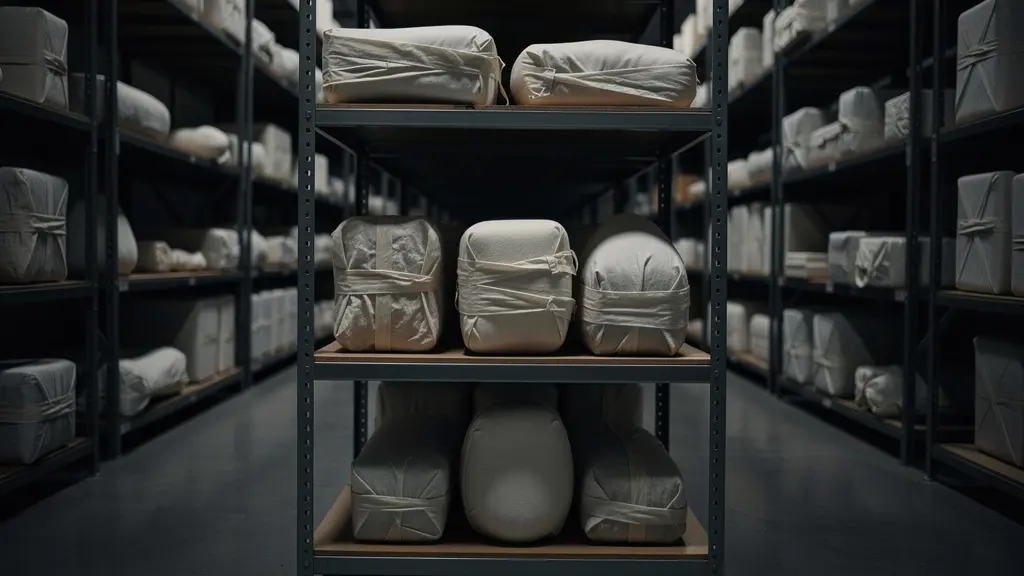
This image of a vast, dark storage facility is a powerful metaphor for the flaw in the universalist argument. If up to 99% of a collection is inaccessible, is the museum truly serving a universal audience, or is it acting as a hoard? The economic and practical arguments are also complex, often pitting the established tourism revenue of a Western museum against the potential for a source nation to build its own cultural economy.
This table highlights the starkly different realities and potentials at the heart of the ownership debate. It moves the discussion from abstract philosophy to tangible consequences.
| Aspect | Western Museums | Source Countries |
|---|---|---|
| Tourism Revenue | British Museum: £4.3 million (2019/2020) | Potential for new cultural tourism economy |
| Display Capacity | British Museum displays only 1% of 8 million objects | New facilities like Acropolis Museum built specifically |
| Access | Free entry, millions of annual visitors | Limited to local/regional visitors initially |
Can Digital Replicas Satisfy the Need for Repatriation of Artifacts?
As pressure for repatriation mounts, a seemingly pragmatic compromise has emerged: the digital replica. High-resolution 3D scanning and printing technologies now allow for the creation of near-perfect facsimiles of artifacts. Proponents suggest this offers a win-win solution: the original remains in the “universal” museum, safe and accessible, while a flawless copy is returned to the source community for study, display, and cultural use. This techno-solutionist approach promises to sidestep the difficult questions of ownership and decolonization.
However, for most source communities, this proposal is fundamentally inadequate. It rests on the assumption that an object’s value lies solely in its physical appearance and informational content. It ignores the core of the repatriation demand: the return of the original, authentic object that carries historical, spiritual, and ancestral power. A replica, no matter how perfect, lacks the aura and ontology of the original. It cannot be used in ceremonies that require the authentic item, nor does it carry the same weight as a tangible link to one’s ancestors.
The scale of the issue is vast, with a digital database from the Museum of Looted Antiquities tracking over 860 repatriation cases totaling more than a million objects. In this context, offering replicas can feel like an insult, a way to maintain control while appearing to be conciliatory. As Katherine Davidson, a researcher, points out, the goal is not a transactional exchange but a fundamental shift in relationships. In her words:
Repatriation is the start of a relationship between a museum and a community, not the end of one.
– Katherine Davidson, Museum of Looted Antiquities researcher
This perspective reframes repatriation not as a loss for the museum, but as an opportunity to forge new, more equitable partnerships based on mutual respect rather than a power imbalance. Digital tools have a role to play in this new relationship—for research, education, and virtual access—but they are a supplement to, not a substitute for, the act of physical return.
The Display Error That Strips Sacred Objects of Their Meaning
One of the most profound harms perpetuated by the traditional museum model is not theft, but decontextualization. When a sacred object, designed for a specific ceremony and imbued with communal power, is placed alone in a sterile glass box, it is fundamentally altered. It is stripped of its function and transformed into a mere “artwork”—an object to be aesthetically appreciated by a detached viewer. The lighting is optimized for visual appeal, the label describes its materials and acquisition date, and its spiritual or social purpose is reduced to a footnote, if mentioned at all.
This clinical presentation is not neutral; it is a powerful act of interpretation that imposes a Western, scientific worldview onto a non-Western object. It silences the object’s own story and the voices of the community that created it. Maasai representative Samwel Nangiria powerfully describes this disconnect: “It’s time museums start to make meaning of these objects by generating knowledge. We want them to attach the same significance to them that indigenous communities do.” This is not a request for better labels; it is a demand for a different way of knowing.
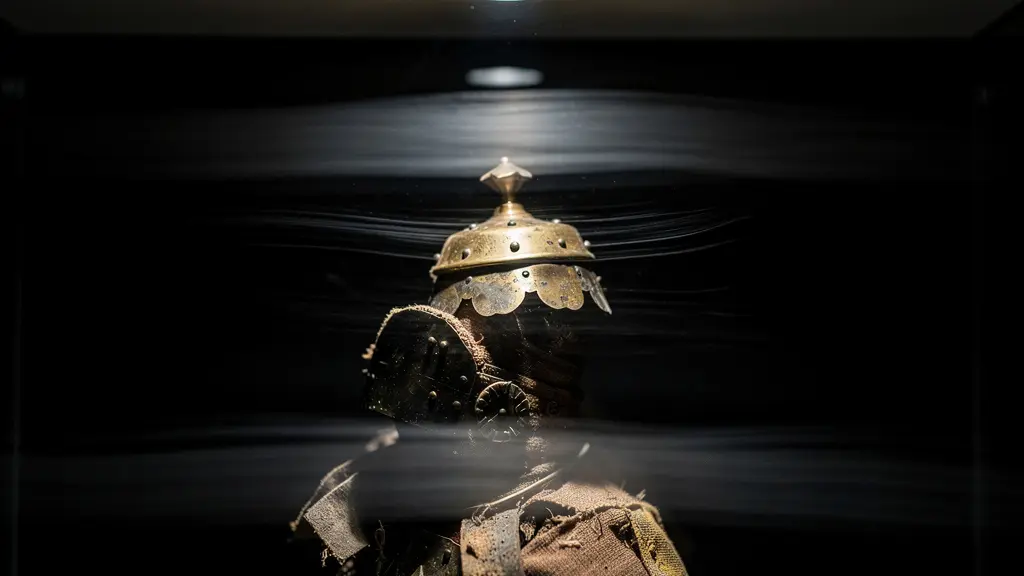
A new model of “active cultural justice” is emerging to correct this error, centered on collaborative curation. Instead of the museum expert holding sole narrative authority, they partner with source communities to decide how objects should be displayed and interpreted.
Case Study: The Maasai Living Cultures Project
In a groundbreaking initiative, the Pitt Rivers Museum partnered with Maasai representatives from Kenya and Tanzania. The project grants community members unrestricted access to the museum’s collections and empowers them to co-curate displays. They have added their own labels, oral histories, and even soundscapes to the exhibitions, effectively re-animating the objects with their original cultural context and restoring their voice within the museum walls. This represents a shift from a monologue by the museum to a dialogue with the source community.
How Do Museums Manage the 90% of Collections Hidden in Storage?
The argument for “universal access” is perhaps most effectively dismantled by a single, staggering fact: the vast majority of museum collections are not on display. It is common for large institutions to show as little as 1-5% of their holdings at any given time. For example, the British Museum is said to display only 1% of the eight million objects in its collection. The other 99%—millions of artifacts, including countless culturally sensitive items—reside in sprawling, climate-controlled storage facilities, inaccessible to the public and even to many researchers.
This reality of the “iceberg collection” creates a significant ethical problem. If an object is not on display, not being actively researched, and not accessible to its source community, what purpose does its retention serve? The justification of public benefit evaporates. The institution, in this case, functions less like a public museum and more like a private hoard. The argument that a source country may lack a state-of-the-art museum facility becomes less convincing when the alternative is indefinite detention in a crate in a Western basement.
Recognizing this ethical inconsistency, some museums are beginning to take a more proactive and systematic approach to their stored collections. This involves not just digitizing items but actively reviewing holdings and identifying objects that should be returned, regardless of whether a formal claim has been made.
Case Study: Manchester Museum’s Proactive Repatriation
In 2023, the Manchester Museum took a landmark step by returning 174 cultural heritage items to Australia’s Anindilyakwa community. Crucially, this was not in response to a contentious claim but was initiated by the museum itself as part of a systematic review of its stored collections. The museum’s policy now explicitly acknowledges that Aboriginal people have the primary right of ownership and control, shifting the default from retention to return. This marks a move from a reactive to a proactive model of repatriation.
The Bias Trap That Can Skew the Historical Accuracy of a Show
Beyond the physical objects, the most powerful tool a museum wields is narrative. Through the selection, arrangement, and labeling of artifacts, a curator tells a story. For centuries, that story was overwhelmingly told from a Western, colonial perspective. The collector was the heroic “discoverer,” the military campaign was a civilizing “expedition,” and the object was “acquired” or “donated,” eliding histories of violence, looting, and coercion.
This bias is not always malicious; it is often the product of ingrained institutional training and a lack of critical self-reflection. The language used in museum labels, the choice of what to display (often aesthetically pleasing objects over items of everyday spiritual importance), and what to omit (the continuous history of the source community) all contribute to a skewed historical record. For a socially conscious citizen, learning to identify this bias is a critical skill for navigating museum spaces.
Becoming a critical museum-goer means learning to read not just the labels, but the silences between them. It involves asking who is telling the story, whose voice is missing, and how the narrative might change if told from a different perspective. This analytical approach transforms a passive viewing experience into an active investigation.
Your Action Plan: Identifying Colonial Bias in Museum Displays
- Examine language choices: Look for loaded terms. Is an object “acquired” or “collected” when it was, in fact, looted? Is a military action called an “expedition” instead of a “raid”?
- Identify the protagonist: Does the gallery text frame the Western collector or archaeologist as the heroic “discoverer,” while the local population is depicted as a passive backdrop?
- Check for missing voices: Does the display erase the continuous knowledge and presence of Indigenous or source communities, treating their culture as a dead or vanished relic?
- Analyze aesthetic selection: Are only the most “beautiful” or intact objects displayed, creating a sanitized and unrepresentative picture of a culture’s material life?
- Trace funding influence: Consider how the exhibition’s sponsors (corporate or governmental) might influence the narrative, potentially limiting critical perspectives on colonial history or modern-day issues.
Why Must All Modern Restoration Techniques Be Fully Reversible?
A core principle in modern art conservation is reversibility. Any intervention—be it cleaning, repairing, or stabilizing an object—should ideally be undoable without damaging the original. This ethical guideline is born from humility: it acknowledges that future conservators may have better knowledge or technology, and it preserves the option to correct a mistake or adopt a new approach. In the context of repatriation, this technical principle takes on a profound political and legal weight.
When an artifact is held by a Western museum, its legal status is often complex, governed by national laws and trustee obligations. For instance, the British Museum Act of 1963 severely restricts its trustees from deaccessioning (permanently removing) objects from the collection. In this legal environment, a non-reversible restoration can be interpreted as a permanent act of appropriation. By altering the object in a way that cannot be undone, the museum reinforces its claim of permanent ownership, making future repatriation efforts even more complicated.
Conversely, adhering strictly to reversible techniques keeps options open—not just for future conservators, but for source communities. The principle, as understood in international conservation standards, is that “a reversible restoration preserves the option for a source community to make a different choice in the future.” Perhaps the community would choose not to restore the object at all, valuing the patina of age or the signs of use. Perhaps they would restore it using traditional methods. A reversible intervention by a Western museum respects their future right to make that decision.
Therefore, reversibility is more than a technical best practice; it is a form of ethical courtesy. It is an acknowledgement that the museum’s role may be that of a temporary custodian, not a permanent owner, and that its primary duty is to preserve the object’s integrity and all its future possibilities, including the possibility of return.
Key Takeaways
- The repatriation debate is not a simple binary issue but a complex negotiation involving ethics, law, and the very definition of a museum.
- Arguments for retention based on “universal access” and “superior care” are weakened by the reality of vast, inaccessible storage collections.
- True restitution is about restoring relationships and respecting an object’s original meaning, which cannot be achieved with digital replicas alone.
How Does a Curator Decide the Narrative of a Blockbuster Exhibition?
The narrative of a major exhibition, which can shape public understanding of a culture for a generation, is rarely the product of a single, autonomous curator. It is a negotiated outcome, a tapestry woven from the competing interests of numerous powerful stakeholders. While the curator provides the scholarly vision, that vision is inevitably filtered through institutional priorities, financial pressures, and political considerations. The recent surge in restitution efforts, with a record number of about 70 repatriations in 2024 alone, is itself a stakeholder influence, pressuring museums to tell more critical and transparent stories.
The board of trustees sets the institution’s strategic direction and tolerance for risk. The marketing department, focused on ticket sales, may push for a simpler, more sensational narrative that is easier to “sell” to a mass audience. Corporate sponsors, whose funding is often essential, can exert influence, sometimes subtly discouraging narratives that might be critical of colonial or corporate histories. Even the education department has a say, ensuring the content aligns with school curricula. This web of influence can lead to a blunting of critical perspectives and the perpetuation of safe, familiar stories.
Understanding these dynamics is key to deconstructing why museum narratives have been so slow to change. The following table illustrates how different stakeholders can shape the final story presented to the public.
| Stakeholder | Type of Influence | Impact on Narrative |
|---|---|---|
| Board of Trustees | Strategic agenda | Sets overall institutional position |
| Marketing Department | Audience testing | Simplifies complex stories for mass appeal |
| Corporate Sponsors | Funding conditions | May limit critical perspectives on colonial history |
| Government Lenders | Political constraints | Shapes diplomatic messaging |
| Education Department | Curriculum requirements | Influences pedagogical framing |
The current pressure for repatriation is a powerful new force in this ecosystem. It is compelling museums to not only re-evaluate their collections but also the very process by which they create meaning. It introduces the source community as a primary stakeholder, not as a passive subject, but as an active partner with a right to co-curate the narrative.
This shift from a top-down, authoritative model to a collaborative, polyvocal one is the most significant change happening in the museum world today. It signals a move away from the museum as a temple of authority and towards the museum as a forum for dialogue—a place where multiple stories can be told and difficult histories can be confronted together.
The challenge, therefore, is not to erase the past but to enrich it with the voices that have long been silenced. By visiting museums with a critical eye, questioning the narratives presented, and supporting institutions that embrace collaborative models, we can all participate in this vital transformation. The goal is a museum that is not afraid to confront its own complex history, one that serves not as a static repository of objects, but as a dynamic center for cultural justice and shared understanding.