Arts & world cultures
Art transcends borders, yet every creative expression carries the distinct imprint of its cultural origin. From the symbolic mudras carved into Southeast Asian temple sculpture to the revolutionary murals painted on city walls during times of upheaval, artistic objects and practices serve as vital records of human belief, struggle, and aspiration. Understanding art through a global lens means recognizing that a decorative item, a painting, or a performance is never merely aesthetic—it embodies the values, histories, and spiritual frameworks of the communities that created it.
For those beginning to explore world cultures through art, the journey involves more than visual appreciation. It requires developing the skills to decode symbols, assess authenticity, navigate ethical collection practices, and recognize how artistic expression adapts to serve social, political, and environmental purposes. This comprehensive introduction equips you with foundational knowledge across multiple dimensions: integrating global aesthetics responsibly, interpreting cultural meaning, supporting contemporary movements, and engaging with art as a living, evolving force rather than static museum artifact.
Bringing Global Art Into Your Living Spaces
Integrating artistic traditions from different cultures into modern interiors has become increasingly popular, but successful incorporation demands more than superficial decoration. Each object carries cultural weight—a term referring to the historical, spiritual, or social significance embedded within traditional crafts, textiles, and artworks.
When mixing contrasting artistic traditions, the fundamental challenge lies in creating visual harmony while respecting the original context of each piece. Think of your space as a conversation between cultures rather than a competition. A Moroccan rug can coexist beautifully with Scandinavian minimalism if you establish a unifying element—perhaps a neutral color palette or consistent material textures like natural wood and woven fibers.
Avoiding Common Design Pitfalls
The most frequent error is overcrowding distinct styles, which creates visual chaos and dilutes the impact of individual pieces. When a Tibetan prayer flag, an African mask, and a Japanese tansu chest compete for attention in the same sightline, none receives proper appreciation. Instead, allow each cultural element sufficient visual breathing room to tell its story.
Authenticity Versus Tourist Reproductions
Distinguishing between authentic craftsmanship and mass-produced tourist replicas requires careful examination. Authentic pieces typically display slight irregularities inherent to handwork, appropriate wear consistent with their claimed age, and construction methods traditional to their region. A genuinely aged wooden sculpture will show natural patina development—the surface changes that occur as wood oxidizes and absorbs oils over decades. Factory reproductions often artificially distress surfaces using stains or abrasion that doesn’t match authentic aging patterns.
Art as a Gateway to Cultural Understanding
Beyond decoration, art functions as one of the most accessible entry points for learning about unfamiliar cultures. Visual narratives communicate across language barriers, offering insight into how different societies conceptualize spirituality, community, and the natural world.
Religious Expression Through Visual Form
Artistic creation has served religious purposes for millennia, and understanding this relationship reveals profound cultural values. In many traditions, creating sacred art is itself a devotional practice—the act of painting a Buddhist thangka or carving a Hindu deity figure constitutes worship, not merely artistic labor. This distinction between spiritual function and aesthetic object becomes crucial when encountering such works outside their original context.
When visiting temples or attending religious festivals, timing significantly enhances understanding. Many sacred artworks serve specific ceremonial purposes and only reveal their full meaning during ritual use. A mask that appears static in a museum case transforms completely when worn during a festival dance, its symbolic power activated through movement, music, and communal participation.
Traditional Craft Versus Fine Art Categories
Western art history created rigid boundaries between “fine art” (painting, sculpture) and “craft” (pottery, textiles, metalwork). Many global traditions reject this hierarchy entirely. In Japanese aesthetic philosophy, a tea bowl crafted by a master potter commands equal respect to a painted scroll. Recognizing this helps avoid the colonial-era bias that elevated European painting while dismissing non-Western textiles or ceramics as mere craft.
Decoding Symbolism Across Artistic Traditions
Every artistic tradition develops a visual vocabulary—a system of symbols that communicates specific meanings to informed viewers. Learning to read these symbols transforms your experience from passive observation to active interpretation.
Asian Symbolic Systems
Asian artistic traditions employ particularly complex symbolic frameworks. In Buddhist and Hindu iconography, hand gestures called mudras convey precise meanings: the Abhaya mudra (raised palm facing outward) signals protection and fearlessness, while the Dhyana mudra (hands resting in lap) indicates meditation. Similarly, the lotus flower appears throughout Asian art representing purity and spiritual awakening—the plant’s ability to bloom unstained from muddy water serves as a metaphor for enlightenment emerging from worldly existence.
Color coding in deity representations follows strict conventions. In Tibetan thangka paintings, different Buddha figures appear in specific colors: white for transcendent wisdom, yellow for increase and prosperity, red for magnetizing power, green for enlightened activity, and blue for transmutation of anger. Confusing these associations can lead to fundamental misunderstanding of a work’s meaning and purpose.
Narrative Sequencing in Visual Storytelling
Many artistic traditions present narratives across multiple panels or continuous scrolls. Chinese handscrolls, for example, were designed to be viewed gradually, unrolled section by section from right to left, creating a sequential visual experience similar to reading. Viewing the entire scroll at once—as museums sometimes display them—disrupts the intended pacing and can obscure narrative development.
Collecting With Cultural Awareness and Ethics
Building a collection of global art requires navigating complex ethical terrain. Responsible collecting means understanding not only what you’re acquiring but how it reached the market and whether your purchase supports or harms the originating community.
Assessing Authenticity and Age
For collectors interested in traditional objects, learning to identify authentic tribal marks and age indicators proves essential. Many African sculptures carry specific patterns or scarification marks identifying their ethnic origin and ritual purpose. Wood aging manifests through predictable patterns: genuine antique wood develops a natural patina, shows consistent shrinkage cracks, and displays wear concentrated in areas that would receive human handling.
Beware of artificially aged reproductions. Unscrupulous dealers sometimes bury newly carved items in soil, expose them to smoke, or apply chemical treatments to simulate age. Authentic patina penetrates wood surfaces gradually and appears in logical patterns based on use and environmental exposure.
Legal and Ethical Boundaries
The risk of illegal export concerns all collectors of cultural artifacts. Many nations restrict the export of objects deemed culturally significant, and purchasing such items—even unknowingly—can result in legal consequences and seizure. UNESCO’s 1970 Convention established international standards, but enforcement varies widely. Reputable dealers provide clear provenance documentation tracing an object’s ownership history, ideally confirming it left its country of origin legally before relevant export restrictions took effect.
Beyond legality, consider the ethical dimension: does purchasing a ritual object deprive a community of its cultural heritage? Some indigenous groups have explicitly requested that sacred items not be sold or displayed outside ceremonial contexts. Respecting these wishes, even when legal purchase is possible, demonstrates cultural sensitivity.
Preservation of Organic Materials
Many traditional artworks incorporate perishable materials—textiles, bark, feathers, natural pigments—requiring specific conservation approaches. Preserving organic materials demands controlling three factors: light exposure (ultraviolet radiation degrades fibers and fades pigments), humidity (fluctuations cause expansion and contraction), and temperature (heat accelerates deterioration). Japanese ukiyo-e woodblock prints, for instance, face particular danger from light exposure; their vibrant vegetable-based pigments fade rapidly under direct sunlight or even extended gallery lighting.
Art Documenting Social and Political Movements
Throughout history, artists have documented struggle, resistance, and social change. Visual art serves as evidence, as propaganda, as mourning, and as inspiration for movements seeking to transform society.
Realism as Political Documentation
During the mid-twentieth century, both Soviet Social Realism and American Social Realism used representational art to document working-class life and advocate for political positions, though toward opposing ideological ends. While stylistically similar—both favored accessible, figurative approaches—their purposes diverged sharply. Soviet realism served state propaganda, celebrating industrial progress and collective farming. American practitioners like Ben Shahn and Dorothea Lange documented poverty and injustice to advocate for social reform, often in opposition to government policies.
Murals as Public Communication
Large-scale murals function as “public newspapers,” communicating political messages to communities with limited access to formal education or controlled media. Mexican muralists Diego Rivera, José Clemente Orozco, and David Alfaro Siqueiros developed this approach in the revolutionary period, covering public buildings with narratives of indigenous history, colonial exploitation, and worker solidarity. This model influenced community mural movements worldwide, particularly in areas experiencing political transformation.
Photography as Evidence and Witness
Photography’s documentary power makes it particularly effective for political purposes—and particularly vulnerable to censorship. Images of protest, violence, or state oppression serve as evidence that governments cannot easily deny. Timing becomes critical: publishing powerful images at strategic political moments can shift public opinion and pressure authorities. However, this same power makes photographers targets; the risk of censorship, arrest, or violence accompanies documentary work in repressive contexts.
Participatory and Community-Centered Art Practices
Contemporary artistic practice increasingly emphasizes participation over passive viewing. This shift transforms art from object to experience, measuring success through social impact rather than aesthetic achievement alone.
From Object to Participation
Traditional art evaluation focused on physical objects—paintings, sculptures, installations. Participatory art inverts this priority, valuing the experience created and relationships formed. A community garden designed by an artist, for example, generates value through the social connections neighbors build while planting, the access to fresh food in an underserved area, and the collective pride in transforming neglected space. The garden’s appearance matters less than its function as catalyst for community development.
Measuring Social Impact
Assessing participatory projects requires different metrics than judging conventional art. Rather than asking “Is this beautiful or innovative?”, relevant questions include: How many community members actively participated? Did the project address needs identified by the community itself? Does it create ongoing benefits or only temporary engagement? Has it strengthened community capacity to address future challenges independently?
Avoiding the Top-Down Approach
The most common error in community art involves artists imposing their vision on neighborhoods without genuine collaboration. Effective participatory practice begins with extended listening: understanding community priorities, existing social networks, and local knowledge before proposing any creative intervention. When artists parachute into communities with predetermined projects, resentment and disengagement typically follow.
Art Addressing Environmental Crisis and Civic Engagement
Recent decades have witnessed art’s increasing deployment for environmental awareness and political activation. These practices blur boundaries between aesthetics, activism, and education.
Material Sustainability in Artistic Practice
Artists concerned with environmental impact scrutinize their own material choices. Material sustainability means considering the full lifecycle: extraction, production, use, and disposal. Sculpture materials like bronze or marble require energy-intensive mining and processing. Some contemporary practitioners prioritize recycled materials, biodegradable substances, or digital forms to reduce environmental footprint. However, this introduces new dilemmas—the NFT energy debate centers on whether digital art’s blockchain verification consumes enough electricity to offset its elimination of physical materials.
Visualizing Climate Data
Abstract climate statistics—parts per million of carbon dioxide, projected temperature increases—often fail to motivate action. Artists increasingly translate scientific data into visceral visual experiences. Installations might use ice sculptures timed to melt at rates corresponding to glacier loss, or accumulate plastic debris to visualize ocean pollution. These translations make invisible crises tangible and emotionally immediate.
Turning Viewers Into Voters and Volunteers
Civic engagement art aims to convert passive viewers into active participants in democratic processes. This requires understanding participation psychology: people engage when they perceive personal relevance, believe their action makes a difference, and see peers already involved. Effective civic art creates clear pathways to action—voter registration drives integrated into exhibitions, workshops teaching advocacy skills, or projects visualizing how policy decisions affect specific neighborhoods.
Street art and murals navigate legal boundaries while maximizing public visibility. In some contexts, community murals receive official permission and even funding; in others, unsanctioned work faces removal and artist prosecution. The most sophisticated civic art campaigns optimize location for impact, placing messages where target audiences—undecided voters, potential volunteers, policymakers—will encounter them repeatedly.
Avoiding the Echo Chamber
Activist art frequently suffers from “preaching to the choir”—creating work that only reaches already-convinced audiences. Breaking this pattern requires strategic placement in spaces where diverse viewpoints intersect, messaging sophisticated enough to engage skeptics without alienating them, and genuine dialogue rather than one-way proclamation. The challenge lies in balancing clear advocacy with openness to conversation.
Understanding arts and world cultures ultimately means recognizing that creative expression operates simultaneously on aesthetic, cultural, political, and spiritual dimensions. Whether you’re integrating global aesthetics into your home, interpreting symbolic systems, building a collection, or engaging with contemporary activist practices, approaching art with cultural awareness, ethical consciousness, and genuine curiosity transforms it from decoration or entertainment into a profound means of connecting across human difference.
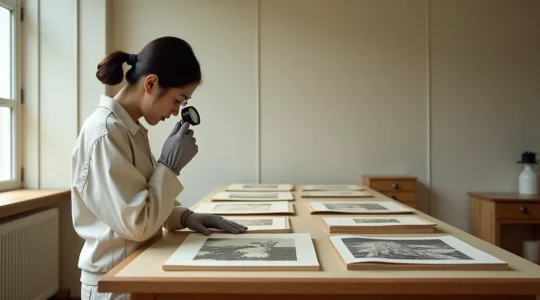
How to Build a Japanese Woodblock Print Collection on a Budget
Contrary to popular belief, building a valuable Ukiyo-e collection isn’t about chasing famous names or spending a fortune on Edo-period prints. The true art lies in understanding market cycles, where today’s undervalued artists like Kunisada or the Shin-hanga masters become…
Read more
How to Read the Hidden Meanings in Buddhist and Hindu Art?
Contrary to popular belief, understanding sacred Eastern art is not about memorizing a dictionary of symbols, but about learning its visual grammar. The meaning of a symbol, like a hand gesture or a flower, is not fixed; it is defined…
Read more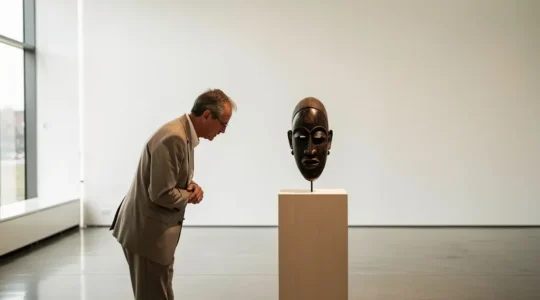
How to Collect African Masks Respectfully and Authentically
Authentic African mask collecting is not an act of acquisition, but an ethical commitment to becoming a custodian of an object’s cultural and spiritual history. Authenticity lies less in aesthetics and more in the verifiable story of the object’s ritual…
Read more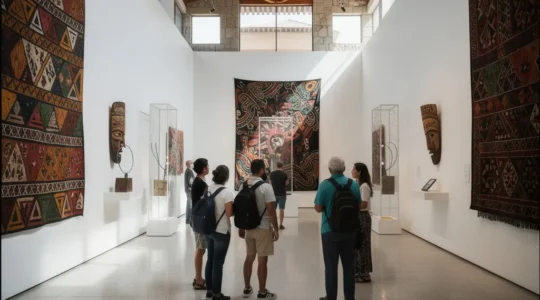
Beyond Souvenirs: How to Read a Culture Through Its Local Art
The deepest connection to a new culture isn’t found in a guidebook, but in learning to read the visual language of its art. Authentic understanding comes from decoding an object’s context, not just admiring its form. Distinguishing between tourist-facing craft…
Read more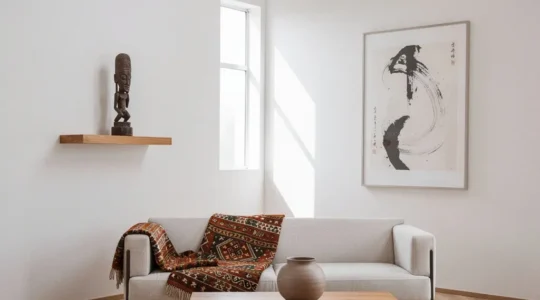
How to Blend Global Cultural Aesthetics Into a Modern Minimalist Home?
To create a sophisticated, globally-inspired home, you must shift from a mindset of ‘decorating’ to one of ‘curatorial conversation,’ where cultural integrity is paramount. Authenticity is achieved not by matching colors, but by understanding the context and history of each…
Read more