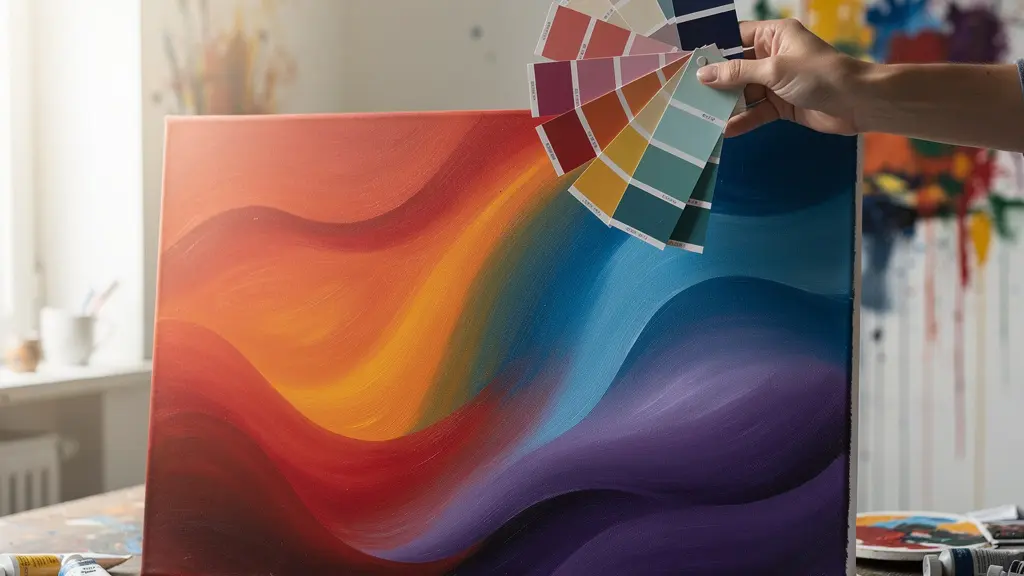
Contrary to popular belief, evoking emotion isn’t about knowing “red means passion.” True emotional control comes from mastering the physics and psychology of color relationships. This guide deconstructs how adjacent colors, limited palettes, light, and even pigment quality are the real tools artists use to manipulate perception and create precise emotional responses in their viewers, moving beyond generic symbolism into intentional psychological impact.
For any artist or designer, the ultimate goal is to connect with an audience on a deeper level. We are often told that the key to this lies in a simplified code: red for passion, blue for sadness, yellow for joy. This elementary approach, while a useful starting point, barely scratches the surface of color’s immense psychological power. It treats color as a set of fixed symbols rather than what it truly is: a dynamic, relational, and highly contextual language. The belief that a single color has an inherent, universal meaning is the single greatest limitation to an artist’s emotional toolkit.
The real craft of emotional manipulation through color is not in the selection of a single hue, but in the orchestration of many. It lies in understanding the subtle yet powerful effects of ‘perceptual context’. This means recognizing that a color’s emotional impact is dictated entirely by its neighbors, the quality of light that reveals it, the culture of the viewer who perceives it, and even the physical quality of the pigment it’s made from. Mastering these relationships is the difference between shouting a single, generic feeling and composing a complex emotional symphony.
But what if the true key to unlocking profound emotion was not in using more colors, but fewer? What if the most overlooked tool in your studio was not a new tube of paint, but the light switch itself? This article will deconstruct the advanced principles of color psychology. We will move beyond the platitudes to explore the scientific and artistic truths behind how color combinations create tension, how light alters mood, and why the physical substance of your paint directly translates to emotional resonance. This is a guide to mastering color as a precise psychological instrument.
To navigate this deep exploration of color psychology, the following sections will deconstruct the specific mechanisms artists use to guide and control a viewer’s emotional journey. Each part builds on the last, creating a comprehensive framework for intentional emotional design.
Table of Contents: A Deep Dive into Emotional Color Manipulation
- Why Does Red Look Brighter Next to Green Than Next to Orange?
- Zorn Palette or CMYK: Which Limited Palette Teaches Harmony Best?
- White for Mourning: How Color Meanings Change Across Cultures?
- The Lighting Mistake That Changes Your Painting’s Colors Completely
- How to Use the 60-30-10 Rule to Balance Any Composition?
- Why Do Impressionist Shadows Look Blue Instead of Black?
- Why Looking at Abstract Art Activates Your Brain Differently Than Realism?
- Why Does One Tube of Red Paint Cost $5 and Another $40?
Why Does Red Look Brighter Next to Green Than Next to Orange?
The perception of a color is never absolute; it is a direct consequence of its surroundings. The reason red appears to vibrate with such intensity next to its complement, green, is a phenomenon known as simultaneous contrast. Our visual system, when faced with two opposing colors, works to push them further apart, amplifying the perceived saturation of each. This creates a neurological “buzz” or a chromatic vibration, an effect that forces the viewer’s eye to engage. It’s an ideal technique for creating a focal point that demands attention and communicates high energy, conflict, or excitement.
Conversely, when red is placed next to an analogous color like orange, the effect is one of harmony and low tension. Because the colors share a common base (yellow), the eye perceives them as related. There is no strong opposition for the brain to resolve. This pairing fosters a sense of warmth, comfort, and cohesion. The emotional impact is inviting and gentle, creating an atmosphere rather than a dramatic statement. The red doesn’t need to fight for attention; it blends into a unified emotional field.
Understanding this principle is the first step toward intentional emotional design. You are not just choosing “red”; you are choosing the relationship red will have with its neighbors. The emotional charge of your composition is born from these pairings. High-energy tension or low-energy harmony is a direct result of the chromatic distance between your chosen hues. An artist manipulates emotion not by picking a color, but by orchestrating a conversation between them.
Zorn Palette or CMYK: Which Limited Palette Teaches Harmony Best?
The debate between palettes like the earthy, classical Zorn palette and the vibrant, modern CMYK is not just about the range of available colors; it’s about the emotional philosophy behind them. A limited palette, paradoxically, often leads to greater emotional depth and harmony. By restricting the number of hues, an artist forces every color relationship to be more considered and meaningful. This constraint concentrates the emotional weight of the piece, making subtle shifts in value and temperature carry significant impact.
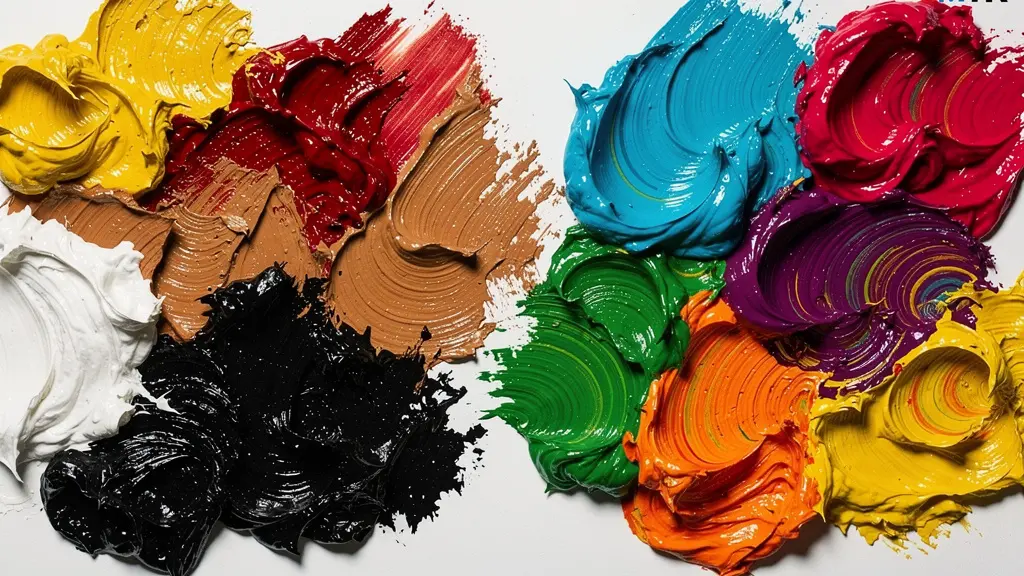
The Zorn palette (Yellow Ochre, Cadmium Red, Ivory Black, White) excels at teaching nuanced, intimate harmony. Its inherent warmth and earthy tones are perfect for capturing the subtle complexities of human flesh and creating a feeling of closeness and introspection. CMYK, on the other hand, is built for versatility and high-impact vibrancy. It teaches a different kind of harmony—one based on clean, modern contrasts and a broad chromatic range suitable for contemporary or commercial work where grabbing attention is paramount.
Case Study: Picasso’s Blue Period as Limited Palette Mastery
From 1901-1904, Picasso used an extremely limited palette of blues and grays to convey profound melancholy and isolation. This monochromatic approach concentrated emotional weight into subtle tonal variations, demonstrating how restriction amplifies emotional clarity. His subsequent Rose Period (1904-1906) used warm oranges and pinks as a direct emotional contrast, showing how palette evolution can guide viewer emotions through an artistic narrative.
The following table compares the emotional effects of different limited palettes, demonstrating how restriction is a powerful creative tool.
| Palette Type | Color Range | Emotional Effect | Best Application |
|---|---|---|---|
| Zorn Palette | Yellow Ochre, Cadmium Red, Ivory Black, White | Warm, earthy, intimate | Portraits, figure studies |
| CMYK | Cyan, Magenta, Yellow, Black | Vibrant, modern, versatile | Contemporary, commercial work |
| Analogous Blue-Green | 3-5 adjacent cool colors | Serene in landscapes, claustrophobic in portraits | Context-dependent emotional duality |
| Monochromatic Red | Single hue with tints/shades | Intense focus, concentrated emotion | Dramatic statements, single mood pieces |
White for Mourning: How Color Meanings Change Across Cultures?
A color’s emotional meaning is not an intrinsic property but a learned association, heavily influenced by cultural context. The assumption that a color’s symbolism is universal is a frequent pitfall for artists and designers. While some primal associations may exist, cultural encoding often overrides them. For example, in many Western cultures, white is the color of purity, innocence, and weddings. However, in many Eastern and some African cultures, white is the traditional color of mourning and funerals, symbolizing the pale face of the deceased.
This relativity is not an exception but the rule. Red may symbolize luck and prosperity in China, while in South Africa it is the color of mourning. Blue, often seen as a corporate and trustworthy color in the West, can be associated with immortality or spirituality in Hinduism. This demonstrates that color is a language, and like any language, it has regional dialects and vocabularies that assign different meanings to the same “word.”
While variations are significant, research does point to some surprisingly universal patterns. A comprehensive international study involving over 4,000 participants from 30 countries found consistent cross-cultural links for certain emotions, such as red with both love and anger. This suggests a dual layer of meaning: a foundational, perhaps biological response, overlaid with a much stronger and more specific cultural interpretation. For an artist, this means being aware of both the potential universal resonance and the specific cultural lens of their intended audience.
White symbolizes purity in the West but is associated with mourning in some Eastern cultures.
– Russell Collection Research, Color Psychology in Art: How Colors Affect Emotions
The Lighting Mistake That Changes Your Painting’s Colors Completely
Artists often obsess over pigment choice, yet frequently ignore a far more powerful manipulator of color emotion: light. The color of the light source fundamentally alters every hue it touches, and failing to control it is a critical error. A work created under the cool, bluish light of a north-facing window will have a completely different emotional feel than the same work viewed under the warm, yellowish glow of an incandescent bulb. Color temperature, measured in Kelvin (K), is not a technical footnote; it is an active emotional tool.
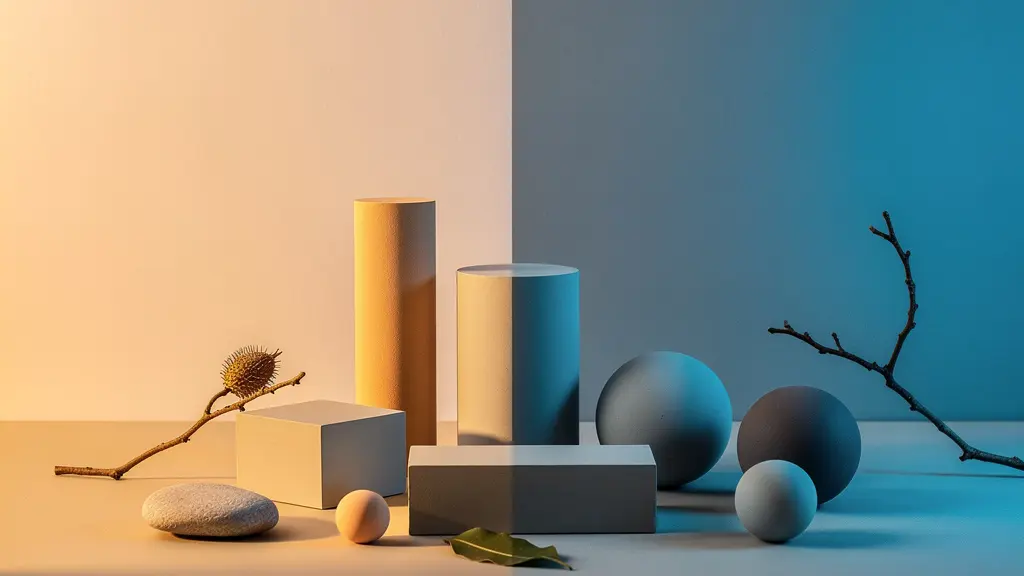
Warm light (around 3000K), like that of the “golden hour,” can transform a melancholic blue into a magical, serene tone. Conversely, cool light (7000K+) can make warm reds and yellows feel alien and unsettling. Neutral studio light (around 5500K) aims to present “true” colors without temperature bias, but “true” is often less emotionally interesting. The choice of lighting is a choice about mood. It can either reinforce the inherent emotion of your palette or deliberately subvert it to create complex, dissonant feelings.
Case Study: Caravaggio vs. Monet: Light as Emotional Manipulator
Caravaggio’s dramatic chiaroscuro technique used extreme contrast between light and shadow to create intense emotional drama, making colors appear more saturated in lit areas and creating psychological tension. In contrast, Monet’s diffuse, soft light dissolved forms and created fleeting, gentle moods. His water lily paintings demonstrate how changing natural light throughout the day completely altered the emotional impact of the same colors, from morning serenity to evening melancholy.
An artist must consider not only the light they work under but also the intended viewing conditions. A piece destined for a gallery with cool, diffuse lighting requires a different approach than a digital piece that will be seen on screens with varying color temperatures. For digital display, for example, colors often need 15-20% more saturation to compensate for screen fatigue and maintain their intended emotional punch.
How to Use the 60-30-10 Rule to Balance Any Composition?
The 60-30-10 rule is a classic design principle that provides a simple yet powerful framework for creating a balanced and harmonious color scheme. It dictates that 60% of your composition should be a dominant color, 30% a secondary color, and 10% an accent color. This hierarchical distribution creates a clear visual path for the viewer’s eye, preventing the chaos that can arise from equally competing colors. The dominant color sets the overall mood and atmosphere, the secondary color adds interest and contrast, and the accent color provides a strategic pop of energy or a focal point.
This rule is effective because it mirrors how we perceive the natural world—large areas of dominant color (sky, grass), complemented by secondary areas (trees, rocks), and punctuated by small accents (a flower, an animal). By emulating this natural balance, a composition feels stable, comfortable, and psychologically pleasing. The viewer’s attention is guided, not scattered. This creates a sense of order that allows the intended emotion to be communicated clearly, without the “noise” of a disorganized palette.
Case Study: Wes Anderson’s Masterful Color Ratio Application
Wes Anderson’s films demonstrate precise 60-30-10 color distribution for emotional control. In ‘The Grand Budapest Hotel,’ pink dominates at 60% (nostalgia/whimsy), purple occupies 30% (luxury/melancholy), and strategic red accents at 10% punctuate moments of violence or passion. This mathematical precision in color distribution guides viewers’ emotional journey through each scene, creating Anderson’s signature controlled aesthetic that balances playfulness with underlying darkness.
Of course, true mastery also involves knowing when to break the rule. As the following analysis shows, deliberately skewing these ratios can be a powerful tool for creating specific, less harmonious emotional effects like tension or chaos.
This comparative table, based on insights from design experts, illustrates the emotional impact of adhering to or intentionally breaking this classic rule, as detailed in a thorough guide on color and emotion.
| Color Distribution | Visual Effect | Emotional Impact | Best Use Case |
|---|---|---|---|
| Classic 60-30-10 | Balanced, harmonious | Stable, comfortable, guided attention | Most commercial work, peaceful scenes |
| 50-50 Split | High tension, division | Conflict, indecision, duality | Depicting internal struggle, opposing forces |
| 95-5 Extreme | Overwhelming dominance | Isolation, hope in darkness, or despair in light | Minimalist emotional statements |
| 33-33-33 Equal | Chaotic, unstable | Confusion, sensory overload | Psychedelic or disorienting scenes |
Why Do Impressionist Shadows Look Blue Instead of Black?
The Impressionists’ choice to paint shadows with color, particularly blue and violet, was a radical departure from the academic tradition of using black or brown. This was not merely an attempt at greater realism; it was a profound act of emotional manipulation. Black shadows create a sense of void, finality, and deadness. They absorb light and create stark, heavy contrasts. In contrast, blue shadows feel filled with light and air. They suggest the reflected light of the sky, infusing the shaded areas with life and atmosphere. This choice transforms a shadow from a mere absence of light into an active, emotional component of the scene.
This technique is rooted in the principle of color temperature. A warm, yellow sunlight naturally produces a cool, blue-violet shadow as its complement. By exaggerating this effect, artists like Monet could evoke the specific feeling of a crisp morning or a hazy afternoon. The emotion is not just “a sunny day,” but the precise quality and mood of that day’s light. It’s a choice to manipulate mood, not just represent reality. As one artist astutely observes, the emotional impact is the primary driver.
Blue shadows feel airy, light, and natural, evoking a different emotion than stark, dead black shadows. It’s a choice to manipulate mood, not just represent reality.
– Louise De Masi, Understanding Colour Psychology
The color of a shadow is a powerful psychological signal. A brown or deep red shadow can feel earthy and warm, or ominous and threatening. A green-tinted shadow might create an eerie or sickly sensation. The artist who defaults to black is discarding one of their most subtle and effective tools for controlling a composition’s emotional undercurrent. Choosing the right shadow color is as important as choosing the color of the main subject.
Action Plan: Auditing Your Composition’s Emotional Palette
- Emotional Touchpoints: List all key elements (e.g., figure, background, shadow) that are intended to carry emotional weight in your composition.
- Color Inventory: For each touchpoint, document the specific hues, saturations, and values you are currently using.
- Harmony Check: Confront your color pairings and ratios against your emotional goals. Does a red/green pairing create the intended energy or unintended chaos?
- Impact Analysis: Identify which colors create “chromatic vibration” versus which create quiet harmony. Is the emotional effect specific and nuanced, or generic?
- Integration Plan: Define specific adjustments to amplify the emotional narrative, such as desaturating a background, shifting a shadow’s temperature, or altering a color ratio.
Why Looking at Abstract Art Activates Your Brain Differently Than Realism?
When we view a realist painting, our brain engages in a process of object recognition. We identify the subject—a person, a landscape, a bowl of fruit—and our emotional response is filtered through our pre-existing associations with that subject. Abstract art, however, short-circuits this process. By removing recognizable forms, it allows color, shape, and texture to communicate directly with the brain’s emotional and sensory centers. It bypasses the intellectual exercise of “What is this?” and goes straight to the primal question of “How does this make me feel?”
This is why abstract art can be so powerful and, for some, so unsettling. It is a direct injection of emotion, unmediated by narrative or recognizable context. The artist is not just showing you a sad person; they are using color and form to induce the neurological state of sadness directly in the viewer. The power of color to influence us subconsciously is well-documented; research on consumer behavior reveals that up to 85% of purchasing decisions are influenced by color, proving its profound psychological impact beyond our conscious awareness.
Abstract art is the ultimate testing ground for color theory because color is the primary vehicle for meaning. There are no other cues to rely on. The success or failure of the piece rests almost entirely on the artist’s ability to orchestrate an emotional response using only the fundamental elements of visual language.
Case Study: Rothko’s Color Field Emotional Manipulation
Mark Rothko’s large-scale color field paintings demonstrate this pure color-emotion connection. His technique of layering translucent colors creates a pulsing, breathing quality that bypasses intellectual interpretation and directly triggers emotional responses. Viewers famously report feeling overwhelmed by waves of emotion—from profound sadness to spiritual transcendence—when standing before his monumental canvases, proving that abstract color alone can be a powerful and direct emotional conductor.
Key Takeaways
- Context is King: A color’s emotional meaning is defined by its relationship with adjacent colors, the light that hits it, and its cultural frame—not by an inherent property.
- Restriction Amplifies Emotion: Limited palettes do not weaken emotional impact; they concentrate it, forcing subtle shifts in value and temperature to carry more emotional weight.
- Light is an Active Tool: The color temperature of your lighting is not a passive variable; it is a primary instrument for altering and controlling the emotional mood of your entire palette.
Why Does One Tube of Red Paint Cost $5 and Another $40?
The vast price difference between a student-grade and a professional-grade tube of paint is not a matter of branding; it’s a matter of substance. The cost is directly tied to the pigment load—the concentration of pure, finely ground pigment versus the amount of fillers, binders, and extenders. A $40 tube of Cadmium Red contains a high concentration of genuine, lightfast pigment, while a $5 “hue” version uses cheaper, less stable synthetic alternatives to approximate the color. This difference in physical makeup has a direct and profound impact on the paint’s emotional potential.
Pure, high-quality pigments offer a chromatic intensity and luminosity that cheaper alternatives simply cannot replicate. This “purity” translates to a more direct and potent emotional impact. The color appears more vital, vibrant, and alive on the canvas. It has a physical presence and a “vibration” that resonates more strongly with the viewer. The emotional response is cleaner, stronger, and more resonant because the color stimulus itself is purer. A duller pigment will inevitably produce a duller emotional response.
Case Study: Cadmium Red vs. Hue: The Emotional Impact of Pigment Quality
A $40 tube of genuine Cadmium Red contains pure cadmium sulfoselenide pigment with unmatched chromatic intensity and lightfastness. This translates to a more direct emotional impact—the color appears vital, powerful, and alive. In contrast, a $5 ‘Cadmium Red Hue’ uses mixed synthetic pigments that create a duller, weaker emotional response. Professional artists report that genuine cadmium creates a “vibration” on canvas that cheaper alternatives cannot achieve, directly affecting viewer engagement and the perceived energy of the work.
The quality of the material is an inseparable part of the final emotional message. An artist seeking to evoke a powerful, lasting emotion cannot ignore the very substance used to create it. The table below outlines how paint quality corresponds to emotional properties.
| Paint Grade | Pigment Load | Physical Properties | Emotional Impact |
|---|---|---|---|
| Student Grade ($5-10) | Low (15-25%) | Chalky, matte, fades quickly | Weak, dull emotional response |
| Artist Grade ($20-40) | High (40-75%) | Vibrant, varied textures available | Strong, pure emotional connection |
| Professional Grade ($40+) | Maximum (75%+) | Luminous, permanent, unique textures | Intense, lasting emotional resonance |
| Handmade/Historical ($100+) | Pure single pigment | Unique granulation, historical accuracy | Authentic period emotion, artistic intent |
Ultimately, wielding color to evoke specific emotions is a holistic discipline. It requires moving beyond simple symbols to master the interplay of color relationships, the strategic use of light, the mathematics of composition, and a deep respect for the physical quality of your materials. To take the next step, begin by consciously analyzing these principles in the works of masters and applying them, one by one, in your own practice.