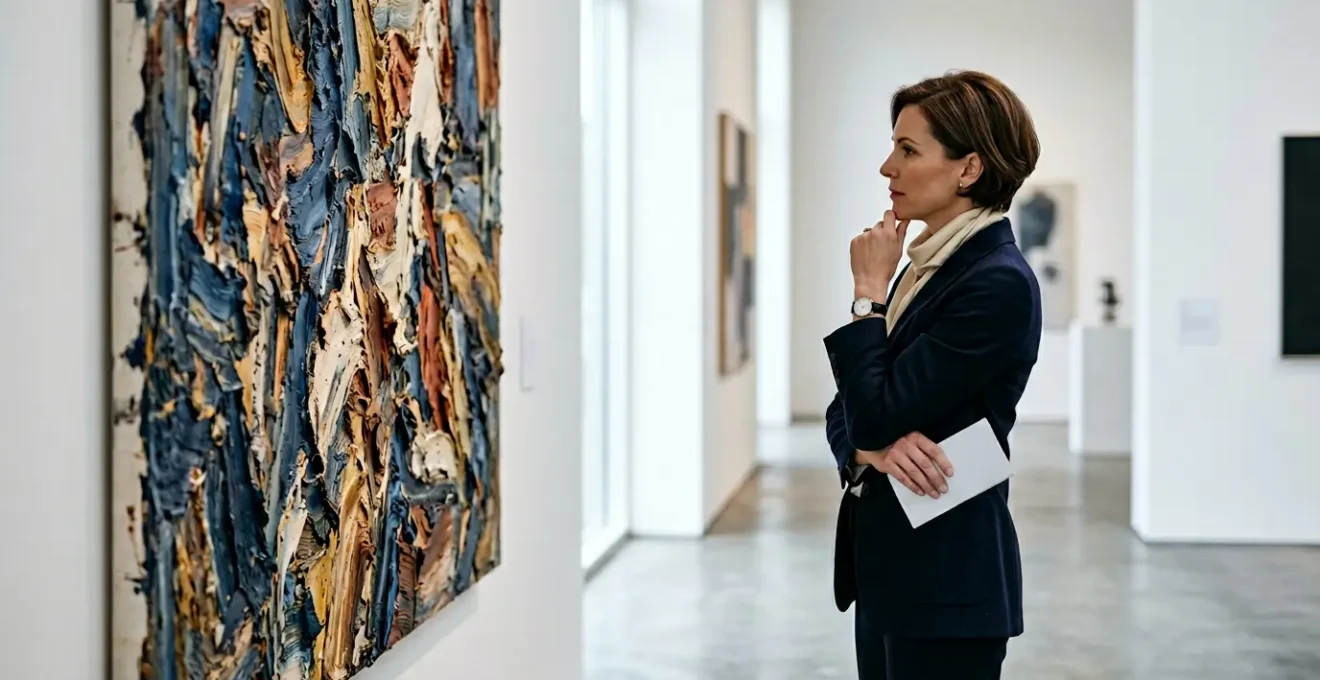
The astronomical price of an original artwork isn’t for the image, but for the irrefutable, forensic proof of its physical existence and authorship.
- Authenticity is a verifiable, scientific attribute (texture, pigment, age), not just a narrative.
- Ownership of a physical canvas is absolute, unlike the complex bundle of rights that constitutes digital art.
Recommendation: Investors must shift their focus from aesthetics alone to mastering the due diligence of material verification.
In an era where any image can be replicated with perfect fidelity and distributed globally in an instant, a fundamental paradox emerges: why do collectors still pay millions for a single, physical object? The rise of digital art and NFTs has only sharpened this question. While many point to common explanations like scarcity or the artist’s reputation, these answers only skim the surface. They fail to capture the profound shift in how value is assigned in the 21st-century art market.
The conventional wisdom is no longer sufficient. The true premium for an original work of art does not reside in its image, which is often freely available, but in its very materiality. The value has migrated to the forensic certainty of the object itself—its unique texture, its chemical composition, the un-fakeable signs of its journey through time. This is not simply a matter of aesthetics; it is a matter of verifiable fact in a world awash with digital ambiguity.
This analysis will deconstruct the layers of value that constitute an original’s worth. We will explore the critical role of paperwork, delve into the science of surface-level authentication, clarify the crucial distinction between owning an object and owning its rights, and provide a framework for identifying fakes and appraising the truly unique. Finally, we will translate this understanding into actionable investment strategies, revealing how to build a resilient fine arts portfolio from the ground up.
This guide provides a comprehensive framework for understanding the mechanisms that underpin the value of original art. The following sections will explore each facet in detail, from the power of a certificate to the subtleties of investment strategy.
Summary: The Analytical Investor’s Guide to Original Art Value
- Paperwork or Nothing: Why Is the COA Worth 50% of the Art’s Value?
- Raking Light: How Surface Texture Proves Human Authorship?
- Owning the Canvas vs. Owning the Copyright: What Did You Actually Buy?
- The “Too Good to Be True” Signs That an Original Is a Fake
- How to Appraise an Original Work That Has No Market Comparison?
- Original Canvas or Limited Print: Which Offers Better ROI After 5 Years?
- The “Sold Out” Trick Galleries Use to Create Artificial Scarcity
- How to Build a Fine Arts Portfolio With a $50,000 Starting Budget?
Paperwork or Nothing: Why Is the COA Worth 50% of the Art’s Value?
In the high-stakes world of art collecting, an artwork without its corresponding Certificate of Authenticity (COA) is often treated as little more than decoration. This single piece of paper can represent an astonishing percentage of the work’s market value, acting as the ultimate gatekeeper to liquidity and legitimacy. The COA is not merely a supplementary document; it is a financial instrument that transforms an object into a recognized asset. It is the passport that allows the work to be traded, insured, and recorded in an artist’s catalogue raisonné.
The logic is simple: the COA provides a direct, documented link to the creator or a recognized expert authority. This verification is the bedrock of provenance, the chain of ownership that traces an artwork back to the artist’s studio. As art consultant Gilles Perrault states, the absence of this document is absolute: “Without it, no door can open: no estimation, no transaction, no movement, no acknowledgment in a catalogue raisonné of the financial value of the declining work.” In this context, it’s clear that authenticity documentation isn’t just paperwork—it’s financial protection.
Sol LeWitt Wall Drawings: When the Certificate IS the Art
Conceptual artists like Sol LeWitt pushed this principle to its logical extreme. For his famous “Wall Drawings,” LeWitt’s studio issues a certificate that contains the precise, detailed instructions for the work’s execution. The owner of the certificate has the right to create (and re-create) the drawing. The physical drawing on the wall is ephemeral, but the certificate is the permanent, saleable artwork. This practice brilliantly demonstrates that value is fundamentally tied to certified authorship rather than the physical object alone—a crucial concept that prefigured the challenges of ownership in our digital age.
For investors, the lesson is unequivocal. The acquisition of an artwork is a two-part process: securing the physical object and securing its authenticated identity. To neglect the latter is to acquire an asset with no demonstrable claim to its own value.
Raking Light: How Surface Texture Proves Human Authorship?
While digital images can be flawlessly replicated, the physical surface of a painting is a unique, unrepeatable historical record. This is where forensic analysis provides what no digital file can: proof of human authorship through “indexical” signs—the direct traces of the artist’s hand. The most powerful tool for revealing this history is raking light, a technique where a strong light is cast across the surface of the painting from a low angle. This method transforms the canvas from a flat image into a topographical landscape of the artist’s process.
Raking light exposes the subtle and inimitable details of creation: the thickness of the impasto, the direction of the brushstrokes, the unique pattern of the canvas weave, and the delicate cracking of aged paint known as craquelure. These features are the artist’s signature written in texture. They reveal the speed, pressure, and hesitation of the creator’s hand. A forger can copy an image, but replicating the exact, layered history of a physical surface built over time is nearly impossible. Forensic experts note that these modern scientific techniques have created havoc in the lives of modern forgers.
This surface texture is the ultimate differentiator. It is a complex, chaotic, and authentic system that stands in stark contrast to the ordered, pixel-perfect uniformity of a digital print or a mass-produced replica. For an investor, the ability to “read” this surface is not an aesthetic exercise; it is a form of due diligence, confirming that the object possesses the unique material properties that justify its premium value. The texture is the evidence of its irrefutable, singular existence in the world.
Owning the Canvas vs. Owning the Copyright: What Did You Actually Buy?
A critical error for new collectors is conflating the ownership of an artwork with the ownership of its intellectual property. The distinction is fundamental and has profound implications for value. When you purchase an original painting, you acquire title to a unique physical object. You have the right to possess, display, lend, or sell that specific canvas. Your ownership is absolute and tied to a tangible asset. The copyright, however—the right to reproduce, distribute, and create derivative versions of the image—typically remains with the artist or their estate unless explicitly transferred in writing.
This distinction becomes razor-sharp when compared to the digital art world. When you buy an NFT, you are not buying the artwork itself but a token on a blockchain that points to a digital file. Your “ownership” is a bundle of rights defined by the smart contract. A detailed review of the collecting considerations shows that digital art requires evaluating the medium, edition limits, certificates, and technical specs for preservation. This complexity contrasts sharply with the straightforward ownership of a physical canvas.
For the investor, the “original” physical work represents a much cleaner asset class. Its value is embodied in a single, discrete object, making it easier to insure, appraise, and transact. While the image of the Mona Lisa is ubiquitous and worthless in its replicated form, the original canvas is priceless precisely because it is the one and only physical source. The value proposition is clear: you are not buying the right to an image; you are buying the irrefutable source object from which all images flow. This singular control over the source is a powerful driver of its premium valuation.
The “Too Good to Be True” Signs That an Original Is a Fake
The high value of original art inevitably attracts forgers, making authentication a critical pillar of any investment. While a deal that seems “too good to be true” is a major red flag, the most successful forgeries are often unmasked not by suspicious prices but by minute, anachronistic details detectable only through science. The first rule of authentication is to assume nothing and verify everything, a principle that turns art collecting into a form of forensic investigation.
Rule number one of the art authentication business is never assume anything.
– Richard Polsky, MyArtBroker Authentication Guide
A classic example is the presence of modern materials in a supposedly historical work. A single trace of a pigment that was not invented until after the artist’s death can unravel an entire fraud. This is precisely what happened in the infamous Wolfgang Beltracchi case, where his multimillion-dollar forgery ring was exposed because he used a white paint containing titanium dioxide, a pigment unavailable to the original masters he was imitating. The anachronism was the forger’s undoing.
For collectors, this means that true due diligence goes beyond examining the signature or provenance. It requires an understanding of the material science of art. Fortunately, a battery of modern techniques can provide definitive answers.
Action Plan: Key Forensic Authentication Checks
- Pigment & Material Analysis: Use X-ray fluorescence or Raman spectroscopy to check for anachronistic materials. Are the pigments (e.g., synthetic ultramarine vs. lapis lazuli) and metals consistent with the supposed era of creation?
- Radiocarbon Dating: For materials created after the 1950s, the “bomb peak” method can detect atmospheric radiocarbon from nuclear testing, definitively dating organic materials like canvas or wood supports as modern.
- Canvas Weave Analysis: Historical canvases have unique weave patterns that act like fingerprints. Compare the pattern against known databases to authenticate or date a work.
- Underlying Image Scan: Use infrared or X-ray imaging to reveal underdrawings (pentimenti) or earlier versions of the painting. Their absence in a style known for heavy revision can be suspicious, while their presence indicates an authentic creative process.
- Organic Material Analysis: Check for trapped organic matter like pollen or DNA. This can help establish a work’s geographical origin and timeline, corroborating or contradicting its stated provenance.
How to Appraise an Original Work That Has No Market Comparison?
Appraising a unique artwork with no direct auction records or comparable sales presents a significant analytical challenge. How do you assign a financial value to something that is, by definition, one-of-a-kind? This is a common scenario with works by emerging artists, or with unique pieces from established artists that fall outside their typical production. In the absence of direct market comparables, appraisers and investors must construct a valuation based on a mosaic of indirect factors.
The first and most critical factor is provenance. A well-documented history of ownership, including exhibitions in reputable galleries or museums, significantly enhances an artwork’s value. It provides a narrative and a stamp of institutional validation that builds confidence in the market. The next factor is the artist’s career trajectory. Is the artist’s work being acquired by major institutions? Are their auction prices on a clear upward trend? This forward-looking momentum can be a powerful driver of value, especially as the market for Contemporary Art expanded at a 13% annual rate between 2000 and 2020.
Finally, the intrinsic qualities of the work itself—its scale, medium, condition, and significance within the artist’s broader oeuvre—are weighed. A large-scale oil on canvas from a pivotal moment in an artist’s career will be valued far more highly than a minor work on paper from the same period. The appraisal becomes less a science of comparison and more an art of synthesis, combining historical significance, market sentiment, and expert judgment to arrive at a defensible valuation.
Provenance documentation adds value to the artwork, enhances its historical significance, and can potentially increase its market value.
– The Americas Collection, Artwork Provenance And Certificates Of Authenticity
Original Canvas or Limited Print: Which Offers Better ROI After 5 Years?
For investors, the choice between an original canvas and a limited edition print is a strategic decision about risk, capital, and potential return on investment (ROI). It’s a common misconception that prints are merely decorative copies; for blue-chip artists, a limited, signed print run is a distinct asset class with its own robust market dynamics. The question of which offers a better ROI depends entirely on the investor’s goals and capital allocation.
An original canvas represents the highest level of scarcity (a single unit) and, therefore, the highest potential for appreciation. It is a high-capital, high-risk, high-reward investment. Its value is tied directly to the artist’s primary market, and a significant positive shift in the artist’s reputation can lead to exponential returns. However, it also requires a substantial upfront investment and has lower liquidity than more accessible assets.
Limited edition prints, on the other hand, offer a more accessible entry point into an artist’s market. As one specialist from PLATFORM Art notes, “if an artist’s painting market is pretty solid, the print market for that artist is typically similar—or maybe even a bit stronger because prints aren’t as difficult for someone to jump in and buy.” This accessibility creates a broader, more liquid market. For example, some of Andy Warhol’s prints have recorded a 7% to 10% annualized return, offering stable, stock-market-like growth. Over a five-year period, a portfolio of well-chosen prints from established artists can offer more predictable and stable returns than a single, riskier investment in an original by an emerging artist.
Ultimately, the optimal strategy often involves a mix. For a balanced portfolio, prints provide stability and liquidity, while a carefully selected original offers the potential for transformative growth. The choice is not “either/or,” but rather a question of strategic allocation.
The “Sold Out” Trick Galleries Use to Create Artificial Scarcity
In the often-opaque art market, perception is reality. One of the most effective tools galleries use to shape perception is the strategic creation of artificial scarcity. A common tactic is the “sold out” show, where a significant portion of an exhibition is declared sold before it even opens to the public. This is often achieved by offering works to a pre-vetted list of preferred collectors. While this may seem counterintuitive—why limit access?—it is a masterful piece of market signaling.
The goal is twofold. First, it generates intense FOMO (Fear Of Missing Out) among other collectors, creating a backlog of demand for the artist’s future work. A collector who “missed out” is far more likely to commit quickly next time. Second, and more importantly, it functions as powerful social proof. A sold-out show sends an unambiguous signal to the market: this artist is in high demand, their work is a desirable asset, and their value is institutionally validated. The iconic red dot next to a work is not just an indicator of a sale; it’s a public vote of confidence.
The red dot is not just about scarcity; it’s about social proof. Each dot is a public validation of the artist’s worth.
– Art market analysis, Understanding gallery sales tactics
This tactic creates a powerful feedback loop. The perception of scarcity drives up demand, which in turn justifies higher prices, further reinforcing the perception of the artist as a blue-chip investment. For an investor, it is crucial to look past the hype and analyze the fundamentals. Is the demand being driven by genuine, broad-based market interest, or is it being carefully manufactured by a few key players? Recognizing this distinction is key to avoiding speculative bubbles and making sound, long-term investments.
Key Takeaways
- The premium for original art lies in its verifiable authenticity and unique materiality, which cannot be replicated digitally.
- A Certificate of Authenticity (COA) is a critical financial instrument, acting as the gatekeeper to an artwork’s market liquidity and recognized value.
- Ownership of a physical artwork is absolute and tied to a tangible object, whereas digital art ownership constitutes a complex and often limited bundle of rights.
How to Build a Fine Arts Portfolio With a $50,000 Starting Budget?
Entering the art market can feel intimidating, but a strategic approach can allow an investor to build a meaningful portfolio even with a starting budget of $50,000. The key is to move beyond speculative purchases and adopt a structured allocation strategy, balancing stability with high-growth potential. The global art market is a formidable asset class, with the global art market recording an estimated $57.5 billion in sales in 2024, and a disciplined approach allows for participation at various entry points.
A widely endorsed method is the Pyramid Allocation Strategy, which structures the portfolio into three tiers of risk and potential reward. This approach provides a logical framework for deploying capital and managing risk.
- Base (50% = $25,000): This foundation should be invested in assets with proven stability and liquidity. Blue-chip limited edition prints by established modern and contemporary masters (e.g., Warhol, Hockney, Lichtenstein) are ideal. They have a deep, global market and act as the portfolio’s conservative anchor.
- Middle (30% = $15,000): This tier is for growth. Focus on original works on paper (drawings, watercolors) by established, mid-career artists whose markets are appreciating. This offers a balance of proven demand and significant upside potential.
- Tip (20% = $10,000): This is the high-risk, high-reward segment. Allocate this capital to one or two small canvases by emerging artists with strong early-career momentum (e.g., recent art school graduates with gallery representation, positive reviews). This is where a 10x return is possible, but it is also the most speculative part of the portfolio.
Crucially, this financial allocation must be supported by an investment in knowledge. A portion of a collector’s overall budget—or at least their time—should be dedicated to museum memberships, art fair attendance, and building relationships with gallerists. This “intellectual capital” is what enables an investor to spot opportunities and make informed decisions, transforming a collection of objects into a high-performing asset portfolio.
Armed with this analytical framework—grounded in forensic verification, legal clarity, and strategic allocation—an investor is no longer just a buyer of beautiful objects, but a sophisticated participant in a complex and rewarding market. The next step is to begin your own due diligence and build a collection grounded in verifiable value.